
Why Predictable Revenue Beats Funding in E-Commerce | Mehmet Can Ilker | Ethnik Living | Profits on Purpose
Dec 29, 2025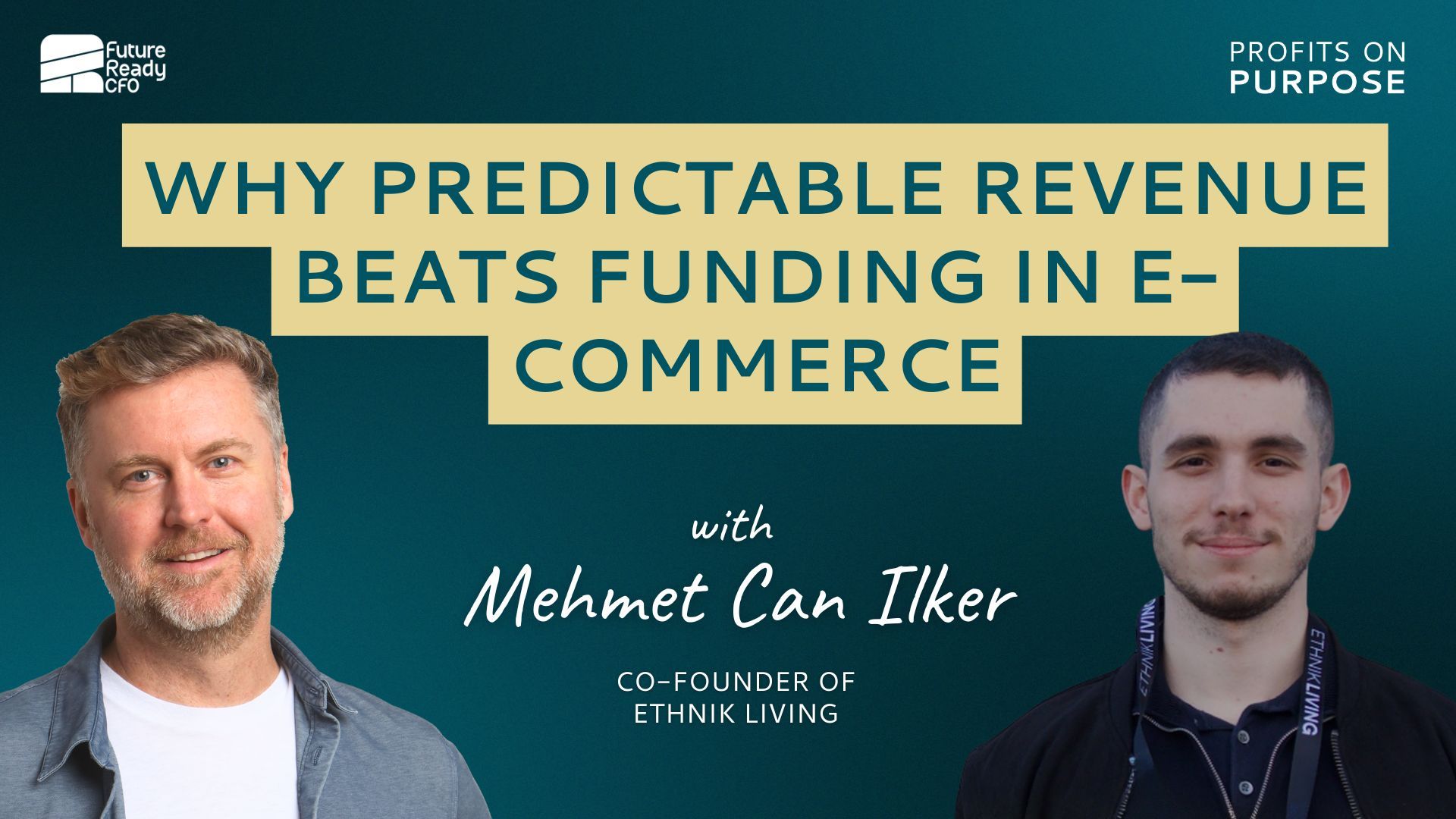
Episode Description
In this episode of Profits on Purpose, host Nate Littlewood interviews Mehmet Can Ilker, co-founder of Ethnik Living, a successful home decor brand that started with minimal investment during the pandemic. Mehmet shares his journey from being an engineering student in Turkey to building a thriving e-commerce business focused on the US market. He discusses the challenges of bootstrapping, managing cash flow, navigating tariffs, and the importance of supplier relationships. The conversation also delves into the unique strategies Mehmet employed, such as creating a custom ERP system and maintaining a disciplined approach to finances. Listeners will gain insights into the importance of predictable revenue, effective customer acquisition, and the value of weekly finance meetings in driving business success.
Key Takeaways
- Mehmet started Ethnik Living with less than $1,000 during the pandemic.
- He went three and a half years without taking a salary.
- The decision to focus on home decor was strategic to minimize returns.
- Building a brand around his products was crucial for growth.
- Negotiating with suppliers helped manage cash flow effectively.
- Mehmet's approach to tariffs involved forward purchasing inventory.
- He emphasizes the importance of predictable revenue streams.
- Weekly finance meetings help track cash flow and performance.
- Creating a custom ERP system streamlined operations.
- Maintaining a cash reserve is essential for business stability.
See More from Mehmet and Ethnik Living
Listen to the full episode to discover how Mehmet's experiences can inspire and guide you on your entrepreneurial journey. Don't forget to subscribe for more insightful conversations!
I hope you enjoy this episode!
Give it a like, share, and subscribe to not miss the content coming your way weekly.
– Nate and the Profits on Purpose podcast team




Transcript
-----
00:00 Introduction to Profits on Purpose
01:26 Mehmet's Journey: From Student to Entrepreneur
06:11 The Discipline of Bootstrapping
09:43 Negotiating with Suppliers for Success
14:09 The Reluctance to Use Debt
16:29 Strategic Inventory Management Amid Tariffs
20:12 Predictable Revenue: Tools and Techniques
22:50 Weekly Finance Meetings for Cash Flow Management
25:32 Building a US Business from Abroad
25:46 Navigating Business Setup Challenges
27:20 Understanding Financial Statements
29:06 Building a Custom ERP System
35:06 Establishing Financial Safety Nets
39:07 Key Performance Indicators for Business Growth
41:07 Adapting Product Portfolio for Customer Acquisition
-----
Nate Littlewood (00:06)
Welcome back to Profits on Purpose, which is the podcast for e-comm and CPG founders who are looking to scale their businesses both profitably and purposefully. I'm your host, Nate Littlewood from Future Ready CFO, which is a go-to fractional CFO solution for seven figure founders who are looking to turn financial chaos and confusion into business clarity and confidence.
So today's guest is Mehmet Can Ilker who's the co-founder of Ethnik Living, which is an LA based home decor brand that started with less than $1,000 during the pandemic and is now approaching eight figures in revenue, entirely bootstrapped. What makes Mehmet's story remarkable isn't just growth, it's about how he actually built this. He launched a US focused e-commerce business from Turkey.
without ever setting foot in the US. He went three and a half years without taking a salary, reinvesting every dollar back into inventory and growth. And when Trump's tariffs threatened to devastate his margins, he made a gutsy call that probably saved his business. His pieces now grace the interiors of Four Seasons Hotels, Chanel flagship stores, and have been featured in Vogue and Architectural Digest.
all while maintaining profitability from day one. Mehmet, welcome to the show. It's great to have you here.
Mehmet Can Ilker (01:33)
Thank you very much. It's great to be here.
Nate Littlewood (01:36)
Awesome. Well, listen, I'd love to get started with talking a little bit about the backstory here and how you began. From what I understand, you began this business when you were an engineering student in Turkey with essentially, you know, 50 bucks in your pocket. Could you walk us through that first year and what was the moment that you realized that this could actually become something real and more than just a side hustle?
Mehmet Can Ilker (02:03)
Yeah, so I started this with not very high hopes of earning lots of money at the time, but I was a student that was trying to make money online. When the pandemic hit, it seemed like the right time to get invested in things, especially since the university was closed and we had time to focus on other things besides studies. And as an engineering student, I wanted to use some of my skills, which are like knowing computer-aided design and how to move things and how to get manufacturers to talk to you and how to talk to manufacturers and everything.
So I thought it would be best to get into home accessories and furniture kind of business rather than a textile or fabric based business. Because A, returns were easier and there were less sizes of the items. So we were basically hoping for having less returns. That's how we decided on getting into furniture. And we just launched a few items and it started taking off. And then I realized, okay, actually I can, if I invest myself into this, if I build a brand around this.
I can then maybe make a living out of this actually. So not just a side hustle, but make it my whole life. And that's when I decided to turn it into my whole life actually. And went full in without any distractions anymore. At that time when I started this, I was also doing an internship somewhere at the summer of it, by the way. Yeah, I was doing an internship somewhere as well. I was thinking of maybe going there full time after the uni.
But then everything just flipped and I just said, okay, I'm going full in on Econ. I'm going full in on this brand that I have to scale it as much as possible. Yeah.
Nate Littlewood (03:42)
Amazing. So I'm curious, was there a specific moment in that journey when you went from it being kind of a hobby side hustle to actually recognizing that this could be something, you know, legitimate and enduring? it, you know, revenue, profitability, cashflow? What were you kind of looking at to make that decision?
Mehmet Can Ilker (04:01)
Yeah, that was a very specific moment actually. I was talking to one of my friends at this internship and I told him that with the money I was making from this job, this online business, I could pay for the university myself without having any support from anyone else. And he said, wow, so you make approximately this much in a year. But he misunderstood that I was actually talking with what I'm earning in one month, I could pay the university.
So then I realized, okay, that means I'm actually making like lots of money. Like he didn't even understand the scale of the thing that I'm talking about here. And that moment was like, wow, okay, so this is actually like quite some money then for a business. like, it's actually like, I can actually go full in. And there's another thing that I opened a Twitter account and I started getting into this like e-commerce Twitter niche kind of like communities and groups.
And I saw the people's revenues there and it was driving me insane. Like all the people, all these famous influencers like David Fogarty, I'm not talking about those people. Even just like random people with 300 followers, we're doing like, I don't know, 50 million a year sometimes with their brands that have started like five years ago, maybe. so that's shown me that everything is like, literally everything is possible to accomplish if you your mind to it. And especially with Econ, there's no...
upper limit to the revenue we can make or the profits we can make. These endless opportunities really were some of the nuances that I found in Econ and in my industry that I really enjoyed and that wanted me to do this full time, made me want to do this full time.
Nate Littlewood (05:46)
Hmm. Interesting. Interesting. So it sounds like it was kind of a couple of cases of just benchmarking and referencing yourself to people around you. Like your friend thought you were making X, but really you were making 12 times X. Exactly. And then you saw all of these guys on Twitter making a whole lot of noise and you thought, okay, that's, you know, seems pretty achievable. That's, that's cool. Good on you. So one of the
Mehmet Can Ilker (06:10)
Yeah. Yeah.
Nate Littlewood (06:13)
hardest parts of bootstrapping businesses like this is often kind of sustaining the, sustaining the grind financially, you know, yourself in terms of paying your rent and your food and that sort of stuff. I understand that you went about three and a half years before taking any money out of the business. And during that period, you were just reinvesting everything back into inventory and growth and so forth. that's a pretty high level of discipline.
What kept you going during that period and how did you finally decide that it was time to start taking money out of the business to pay yourself?
Mehmet Can Ilker (06:54)
Yeah, at first it was very easy because I was literally not spending any money because I was like living in a small place and living in Turkey is also very affordable. So just like a couple hundred dollars a month was enough for a very long time at least. And I was actually a still life student as well. So that meant like not a lot of traveling.
not lot of expenses, not a lot of shopping and things like that. So when your expenses are very low and there's literally nothing to lose, you can go all in and save as much as possible. And that actually gave us a snowball effect in some sense. We started manufacturing here in Turkey first, we were working with manufacturers. We will sell an item, get it manufactured and ship it. And that allowed me to build a cash flow like that.
allowed me to scale the business a little bit because I didn't have to tie my money up into inventory at the beginning. But then when things started scaling, manufacturers had a lot of problems with quality and shipping prices were very high as well. We started seeking, basically asking the question, okay, how do other people do this? And when we found out that others were doing this by just sorting from these suppliers, that supplier.
using like international shipping, freight shipping with the containers. Then we decided to switch on that and we needed extra money there. But it was A, because we were very smart from the beginning and we literally like didn't spend any money that we didn't have to. It was relatively easy to switch to this because we were already saving up and we started tying some money to inventory, then started growing it a little bit, a little bit. That period was very difficult because every month
the numerical value of the inventory we had, I mean, the fiscal value of it had to grow because the revenues were growing and for every growth you have to purchase the item like maybe three, four, six months ago. as we were experiencing some growth as well, and we were projecting more, we had to tie a blurt of the money to inventory. So that period, we still didn't take any loans or anything, but was very difficult to manage in terms of cash. And I remember having some...
dermatological problems on my hands because of all the of trying to manage that cash.
Probably survive it at the end of the day, so yeah.
Nate Littlewood (09:19)
Clearly, clearly. But I'd love to learn a little bit more about some of the tools and models that you may have been utilizing during that period. You mentioned, you know, the very common paradox for fast growing brands, which is that as revenue is growing, the cost of goods sold has to grow. And so the inventory that you need to be sitting on can grow quite quickly. And it is possible to get into situations where the cash needed to put into inventory can exceed.
profits that the general business is actually generating. were there any specific tools or models or frameworks that you use to manage cashflow during that period?
Mehmet Can Ilker (09:58)
Well, we negotiated some payment terms with our suppliers. That's one of the things that were helpful. And also with our freight forwarders as well. So those two really helped to begin with. But then one of the things we did was actually, if I sum it up, everything really comes down to negotiating with your suppliers, in my opinion. I mean, to find some suppliers, there are some tools you can use online, even like all these Amazon sellers or dropshippers, they all use them. But
At the end of the day, things come to personal relationships with your suppliers. If you can show them that you're actually growing, if they have high hopes, and if you can become like, not the maybe most important customer, like an important customer, like a reliable customer for them, if you make your payments on time, if you constantly introduce new items, if your purchase order, numerical values are increasing or growing every month, then okay, they see a future in you as well. So it's kind of like a mutually beneficial relationship for both of you.
And with this, like promises that they get from you, they can then negotiate with their suppliers as well. So if they don't have all the burden themselves, that's one of the things, that's nearly all the things that we've done with our suppliers to just grow, keep on growing basically. Yeah.
Nate Littlewood (11:15)
That's such an interesting point you just made about the promises you make to your suppliers and giving them visibility. It can actually help them with their suppliers in other words, going back further up the supply chain. And I assume, you know, if they can get payment terms from their raw material suppliers, then they're more likely to be willing to give you payment terms for the finished products that you're buying.
Mehmet Can Ilker (11:42)
100
because if they get 60 days and they give us 30 days, still have an advantage and they can even use the future numbers to negotiate the prices down with some of their suppliers. That's one of the things that we did when the pandemic went, sorry, not the pandemic, these new tariffs were introduced, offering guarantees to some of the suppliers about quantities and helping them reduce the basically prices they get from their suppliers to reduce our overall costs.
to balance the tariff effect basically.
Nate Littlewood (12:14)
Interesting. Interesting. So you have been based in Turkey for most of this period. And you mentioned earlier that a lot of your suppliers were also from Turkey. How important do you see that as being to managing these relationships and being able to negotiate the terms that you did?
Mehmet Can Ilker (12:34)
yeah, right now, all these negotiations and everything that I've talked about has never happened in Turkey. Everything happened after we moved everything to overseas to China, Indonesia, Vietnam, and like India and other countries. So I think being close to your manufacturers somewhat help, but being not too close also helps as well with maintaining professional relationships with them.
So every now and then, of course, you have to visit the factories to see what's actually going on on the floor. I we have inspectors that we send after every purchase order, after every batch of manufacturing, just to check the qualities and everything. But still, going there in person changes things I see from the way I see it, at least. So it comes down to the personal relationships you can have with them, in my opinion. you have to like, both personally as a business, you have to be someone who they can rely on.
as well, because you're also relying on them. And if you think about it, like businesses, just people relying on each other, you paying FedEx, you're relying on them that they're actually going to deliver the item. Customers paying you, relying that you're actually going to ship it out and it's going to be actually like what it looks like online and things like that. yeah.
Nate Littlewood (13:48)
Interesting. Yeah. It's an interesting way to, to put it just a sequence of, people relying on each other. Yeah. Well, on that topic of relying on people, the other day when we chatted, I think you mentioned that you guys had never taken on a loan before. And I'm not sure if this is accurate, but I, think maybe I picked up on a little bit of a, a fear or a reluctance to use debt products.
Can you talk to me about that, your relationship with Dead and how financing, external financing has or hasn't played a role in this business?
Mehmet Can Ilker (14:27)
Yeah, we've only used one very small loan and that is this year. It was started like maybe three, four months ago. And we've only done it to build the reflexes in this company in the accounting department to handle debt basically, because we've never had debt before. All the debt we had was like credit cards and we literally like max them out almost every week. So we have to just, it's like a weekly debt cycle at most.
I've always been really afraid of since maybe like I was a child. don't know. I was raised this way. So I've never wanted to take any debt. I never wanted to owe any money to anybody. And that's been one of our principles basically since we started. always avoided debt. I don't think this is the smartest thing you can do to be honest with you because if you use and scale using debt, it's very smart to do. Why not do it?
But I know that it's a very conservative approach and not everybody wishes to do this. But for me, it helped me sleep well at the night. So I'm guessing that's an advantage that was used for this business as well.
Nate Littlewood (15:41)
And
you call that an intangible benefit. I'm curious, this sort of early childhood relationship, I guess maybe it might've come from your parents. I did your parents...
Mehmet Can Ilker (15:44)
I'm sorry.
Oh yeah, 100%. Yeah. Some
bad experiences with like family being damped to some other businesses and things like that basically. So some personal experiences there had some effects on me, I guess.
Nate Littlewood (16:07)
Yeah. Wow. It's, it's amazing how these, these childhood experiences can go on to kind of shape and form us as adults in so many ways. Interesting. Well, let's talk about, tariffs. I recall you guys made some pretty interesting calls around this. So a little while back when you could see that these tariffs were about to hit,
You've made a pretty big call and pulled a whole lot of cash and bought a very, very significant amount of inventory from what I understand. Yeah. Before the tariffs were going to apply. essentially taking a, you know, forward purchasing type approach to it. Walk us through that decision-making process. How did you know that that was the right move to do? And especially coming from a guy who sounds like, you know, you've been
raised to be fairly conservative when it comes to managing your finances. This feels like a pretty gutsy call to be making, buying a years worth of product in advance. How did you rationalize that and talk us through the execution of it?
Mehmet Can Ilker (17:16)
Sure. So this was, I don't exactly remember when we discussed this in house in our company. Well, we knew like basically it was very obvious for us that Donald Trump was going to win the elections and there were going to be increases in the duties from China. And when I went to China in October, this is all everybody was talking about. Every manufacturer I sit down with, in their eyes, I'm American because like I represent an American company.
So I'm trying to explain to everybody that I'm actually Turkish there as well. It's a funny structure. But yeah, so like, I'm trying to explain basically that I don't have a political view on this because I don't, it's like, I don't even get to vote in the US. Anyway, so we were discussing these possibilities and everybody was sure that like there was going to be increases in the tariffs basically. that's, and some gut feeling and just, I don't know, trying and
reading and rationalizing the news, I guess. We weren't sure that the Donald Trump was gonna win and there were gonna be significant increases in the tariffs. So what we did was we always project our revenues ahead anyway. We knew what we were gonna do in 2025 as well. And it seems like we were very accurate by the way, so far. And we did okay. These are our best seller items. So there's this 80-20 rule, right? 80 % of your sales come from like 20 % of your.
products basically. And if you focused on the 20 % of the products and said, okay, even if they're overstocked on these at the end of the year, and we can't hit our goals, like we know we're going to sell them because these are our best sellers anyway. So what we did was we bought both quantities, and we used the quantities A to reduce the pricing of the items as well. And we loaded them on ships and just brought everything to the US before the tariffs hit.
We only had one, and that's a 20 foot container that wasn't even full by the way, that was affected by the 130 % tariff rates. And it's just like, yeah, it's just like one of, just one we couldn't reach on time. Everything else was cleared way before the tariffs were introduced. So yeah, we just like accepted the loss there, I guess, since it was only one of them. And yeah.
That's about it. mean, was looking like it was a very smart move that made us a couple hundred thousand dollars this year, maybe alone. I don't know.
Nate Littlewood (19:48)
Yeah. Yeah. Well, it sounds like a played out for you, but there's a few interesting points in what you just said that I'd love to unpack. The first is about predictability of revenue. And candidly, you know, as a fractional CFO working with a lot of different brands in this space, I see that that's often something that brands struggle with. You know, they don't always exactly know what it is. What is the activity that drives revenue?
And therefore, if you don't know how to create their revenue, can often be difficult to predict it accurately. Could you talk us through how you've managed to get to the point that you are in terms of such predictable revenue numbers? Like what are the mechanisms or tools or channels you're using to acquire these customers? And how did you get that level of confidence that you needed to have on revenue?
Mehmet Can Ilker (20:39)
Yeah, sure. first thing I want to say is I don't think there's any tool out there that can save you, they can just give you the stats you need without you deeply diving into data and understanding it. I come from an engineering background and that really helps with analyzing and reading data and doing a lot of excelling Google Sheets work all the time. And one of the things that made us accurate was we were not expecting a very, very big revenue increase this year.
because we say we're going to build the systems and understand how the customer acquisition mechanisms really work in our business to actually just focus for a very big growth in 2026. We've still grown, by the way, almost close to like 50 % this year. yeah, but the year before that, we more than tripled, think, if I'm not wrong. So it wasn't a very big increase for us this year, but still an increase because we've introduced lots of new items and focused on customer acquisition and everything.
And I know all of our new customer acquisition costs, returning customer ratios, like B2B clients, D2C clients, like I know all the statistics about them. Really, I knew how much we were going spend almost every month just mapping things with the last year and everything. And it turned out to be very accurate. We track every Monday, we have a finance meeting, weekly finance meeting that we go through this coming week's data revenues.
And daily basically, I'm catching flows and app flows that we keep since the beginning of this year. That makes it very accurate through the end of the year. Cause you start seeing some patterns, you start understanding things. Okay. My revenue is maybe lower or higher during the weekends. Okay. My Mondays are the best days and things like that. So then you start to kind of understand and build these reflexes and you get into this kind of like a flow state kind of thing with your financials. For example, if a sale is ending that day, you're going to see a
very high revenue compared to the data coming next and things like that. So it builds everything into these daily projections. And we try to reduce the errors every day through the end of the year to be very accurate. And that really works out well for us at least so far.
Nate Littlewood (22:53)
So this Monday finance meeting that you just mentioned sounds really interesting. I haven't heard of a lot of brands doing that sort of thing. How did that come about? And can you tell us any more about the format and what gets discussed and some of the things that you actually look at in that meeting?
Mehmet Can Ilker (23:11)
Absolutely. So there's an 11 hour difference with Turkey and Los Angeles. And every Monday on 11.30, basically, it's like half past midnight in LA and the week is officially over. And we take all the, we refresh all the screens here, we eat in a room and start discussing about what happened last week in terms of revenue, like new customer acquisition, number of new customers and like sales of
each queue and everything. We have these fixed reports that we just changed the timelines and it's there. And we check our contribution margins and profits basically. And we try to see if everything is alerting, anything that we charged wrong, anything that was unprofitable. That can be an order that wasn't like, that can be an invoice that is more than it should have been. And we plan on the coming week as well, that meeting. How much revenue are we going to make every day?
how much had spent there's going to be and things like important like payment schedules that we have. We might have an upcoming payment to the supplier or like someone else. We just plan these and starting bank balances, ending bank balances as well. We have these in different sheets that we track. So this really helps us literally like track what's going to go on every day of the week. Yeah.
Nate Littlewood (24:31)
Yeah.
Mehmet Can Ilker (24:39)
And that's how we get very accurate. Yeah, yeah, yeah.
Nate Littlewood (24:42)
It sounds, mean, what you just described sounds like you're basically walking through one week at a time, a cash flow model and looking at everything coming in. Yeah. Everything that's coming out for, for that week. you're kind of living almost in a cash flow model week to week. which is a very in-depth way of doing it. Yeah. haven't, I haven't heard a lot of the folks going at that deep on it.
Well, you are based in Turkey from what I understand, but you have built a US focused econ business. And I understand it was, you know, a number of years into this before you actually, you know, visited the US for the first time. you tell me a little bit more about that? Like, what was it like to build a business here from outside of the country and to be serving customers here without having set foot in the country before?
Mehmet Can Ilker (25:24)
Yeah, for sure.
It was, I will say, a very interesting experience. I just had this concept on my mind that like, it's going to sound so cringy maybe, but like literally anything is possible. And like, you actually believe in it, that is absolutely possible to do. Like not stepping foot in the US and starting a business there. I didn't know even how to invoice someone when I started this business. And we didn't have a CPA.
We didn't have chat GPT back then that I could ask these simple questions as well. So it was like very difficult to start with because it was so many foreign concepts. Like for example, for the US, I'm a non-resident alien. And even understanding what the alien meant in there in English was some sort of a challenge. I was like, I an alien or something? It was interesting. So yeah, I spent a lot of time doing research and how to set up.
Nate Littlewood (26:22)
very flattering term, is it?
Mehmet Can Ilker (26:32)
business, like which states is the best and things like that. We've dwelled a lot on these. What turns out, we've made a lot of the right decisions at the time. We now have a very good CPA who's half Turkish, half American. those guys, shout out to them from here, are really helping us with everything in terms of like knowledge. And I have a fair amount of knowledge that like, I know most of the information that I need to know to handle this business as well now.
So it's now easier, but at the beginning there was a lot of things to learn and I don't come from any like finance background as well. I did an economics minor in the university as well, but like they don't teach you this stuff over there. yeah, it was a lot of new things to learn, thanks to YouTube and Google and IRS website, I learned a lot of things.
Nate Littlewood (27:24)
I love it. I'm curious as a engineering mind, I mean, you mentioned before that you're pretty good with numbers and data. I gather that stuff comes pretty easily to you, but as you have kind of grown and evolved as a business owner and needed to learn more about business finances, what have been the most complicated or challenging parts of getting your head around that world?
Mehmet Can Ilker (27:50)
Well
I I don't still deeply understand our balance sheet, for example, although I understand the income statements. maybe I should be better at knowing capital expenditures and operational expenditures and these subcategories of everything. I look at the things from a much...
like outside of a box kind of perspective now, there's always somebody else doing the thing that the work like that is actually like on a deep down level. I just get the song reads or briefs now. And maybe I should be better at those.
Nate Littlewood (28:42)
Better at understanding the balance sheet you're saying.
Mehmet Can Ilker (28:46)
Maybe, yeah. Maybe that's what I will say. I couldn't, for example, track the cash flow myself. There has to be someone that does it and I just look at the outcome and see if there's a problem or not. I don't look into specific cell details, but try to look at the overview. A, because I don't have the time to do it anymore. And B, it's a very repetitive task after some time that I really don't want to do it.
Nate Littlewood (29:12)
Yeah. No, hear you on that. Well, on the topic of building businesses, I uncovered during my research that you guys made an interesting decision around your ERP system. instead of deciding to do what most founders do and just buy one with a monthly subscription, I believe that you went and built your own ERP system called Ethnik Living Operations Panel.
that's a, that's an unusual move. Tell me a little bit more about that and how you concluded that you weren't going to be able to just, you do what most people do, which is sign up for a subscription.
Mehmet Can Ilker (29:56)
So A, we tried a subscription before for inventory. We were really struggling with knowing the actual value of our inventory at the beginning. And we bought this software that I'm not going to name here. And after 12 months, it still wasn't set up. It was like the complete worst purchase I've ever made in my business life, ever. And then I decided, okay, we should be able to build something that is close to this.
that the thing that we paid for that was supposed to work for like, I don't know, very affordable prices. That was the first module that we tried to build. And we built something like a module about this. And then, you know, there was skews and like quantities and everything. So we said, okay, maybe we can connect our TPL to this and see the like open order quantities and the quantities of stock we have on hand. So that if we by accident just don't fulfill one of the orders,
We see an open order on some item with enough inventory. We'll just look into it and fulfill, for example. And then we started building something like an inventory modular within it. Then we said, okay, maybe with the product names here, we should add more details. And we added a product library into the product as well. So now we store all the product information, like all the manufacturing files, test reports, like the technical drawings and things like that, then.
Then we just edit layers and layers onto it. And now it's a fully functioning ERP with a, it's kind of like a command center now, actually. have some, because we sell furniture, we don't ship everything with FedEx and UPS. Some of the carriers we have are very small companies with their own systems that you cannot just find on ShipStation or EasyShip or like these softwares. So we had to build any way, custom integration with them to our warehouses. We gathered everything in one single place now.
That is our operations panel. And for example, with just one click, we're able to just generate a label, send it to the warehouse, send it to the shipping company, and produce that amount from the inventory, change the inventory value on hands. all of this with a click, for example, now we're able to do. These are really saving us time and effort and producing the amount of repetitive tasks. And it's not prone to any errors as well, since it's automated. I guess it's really saving us some time as well.
Nate Littlewood (32:22)
Nice, nice. That shipping integration sounds interesting. Do you find that you're saving much on freight or shipping rates because of using these smaller carriers?
Mehmet Can Ilker (32:35)
I mean, for furniture in the US, shipping is always a problem from what I see, because they're bigger items and most of the time the companies have to call the customers to just like them schedule a delivery time. It's always a problem if they just leave it on the, I don't know, entrance and not take it indoors and things like that. So there's a lot of small regional carriers as well that we have to work with.
And not every one of them has very modern systems because they're not IT companies, they're logistics companies that were probably founded like maybe 20, 30 years ago when these systems were in this, when there was even no Shopify. So some of them don't even have a Shopify integration at all. And we had to like just build something manual to just build the labels and attach them to our shipping orders in the BPL that we have, for example.
Nate Littlewood (33:27)
Okay. So it sounds like it's might be a bit more about quality of service than it is the.
Mehmet Can Ilker (33:34)
Well, it is both actually. Yeah, quality of service, because some carriers are very fast in some regions because they have a bigger hub close to one of our warehouses, for example. And some of them are just good at servicing one area while the other one is very cheap. Sometimes you'll get a celebrity client or someone who needs something delivered like very fast. Then they'll use someone else for that job because the other's timeline just don't work. Like all these different requirements in the world just
made us choose a lot of different supplies for shipping.
Nate Littlewood (34:07)
Interesting. Have you ever thought about monetizing this software beyond your own business? Is it something that you have?
Mehmet Can Ilker (34:14)
We've actually discussed this in-house. But since everything is so like unique to build to us, it has to be a furniture company that's going to use this, that's for sure, because of all the things that are built in. like, don't know, maybe in the future, who knows? It's still, maybe has one third of the things that we want it to have. We're still developing a lot of new features, like some flag systems if an order isn't delivered in like the promised days or things like that.
Yeah, we'll see how it goes by the end of next year, hopefully. We're still building everything, a lot of things there.
Nate Littlewood (34:47)
Interesting. Well, maybe that'll be your, your second act as a founder. You're going to start a B2B SaaS doing customer for furniture, furniture businesses or something. It'll be cool. Well, you have clearly done a very good job of managing the cashflow and finances side of this business. And you've done some really interesting stuff in terms of building ERPs and so forth. you mentioned the other day that.
You have emergency plans, I think was the term you used if things drop below certain levels. I'd love to talk a little bit more about some of the, some of the things you look for on these dashboards and data sets and how you've come up with some of these safety levels that you mentioned the other day.
Mehmet Can Ilker (35:39)
Mm-hmm. Cool. So one of the safety measures that we have is just very direct, very simple, looking at the cash in the bank. That's it. yeah, yeah, that's just like rule number one. There has to be a certain, there has to be a more certain number, right? Because if you don't have cash in the bank, nothing else matters. No one's going to sell their services to you, basically. yeah, that's the first thing that we look at. And we've started building this reserve kind of mentality.
with different banks, different bank accounts, having an in-house something like a reserve that we can take a loan from sometimes that is kind of like acting like a small, I don't know how to put this into words, like kind of like a small bank that we have to pay interest to ourselves. So we're now trying to build this to a certain multiplier of our monthly revenue. That's gonna be it.
cash available in the business to use in the emergency kind of situations if sales go, if something goes very wrong, I don't know what can go very wrong, but if we have a problem with a very big batch of manufacturing, for example, I don't know, if one of our containers fall into the ocean, that can happen any day. if there's another fire in Los Angeles and this time actually something happens to our warehouse, for example, like things like that. Just in case.
Nate Littlewood (36:56)
Yeah, that can go wrong.
Mehmet Can Ilker (37:07)
We're going to need a lot of cash one day. Just let's have it right now. That was the plan basically.
Nate Littlewood (37:13)
Interesting. Yeah. If you don't mind me asking, what's the revenue multiple that you're aiming to keep here?
Mehmet Can Ilker (37:21)
It's one times the month of revenue right now. we're of adding, it's basically, let's say for a hypothetical company, you have 10 % OPEX. That is very reasonable, guess. And that means you have like 10 months of runway, basically almost, with that kind of money, which is enough time to fix things actually.
So for us, we have this kind of a mathematics behind it and one month revenue seems like the correct number now. Maybe we will increase this to 1.5 in the future. But right now for 2025, all I want to do with this... Applauds. All I want to do with this keep it at 1 times to 1 zero for new basically.
Nate Littlewood (38:10)
Yeah. Interesting. Interesting. A metric that I track on behalf of my CFO clients is cash in bank as a multiple of the SG &A, know, like indirect and overhead expenses. And I usually like to recommend that they keep at least three months, which essentially means that if all of the operations were to grind to a halt and there was, you know, zero gross profit and zero sales coming in,
you could at least afford to pay for three months of overhead.
Mehmet Can Ilker (38:40)
Exactly, exactly, yeah. That's the logic behind us as well.
Nate Littlewood (38:44)
Yeah. Yeah, I like it. I like it. So as you know, I'm also a bit of a numbers nerd as a finance guy. And I feel like we may have a couple of things in common here, but I'd love to know from your perspective as a business owner and operator, what are some of your favorite business KPIs and metrics that you like to follow? How often do you track them and why?
Mehmet Can Ilker (39:15)
Sure. One of the things that I love is Ankec new customer acquisition cost. It's something I look into like nearly every day. And obviously with that comes ROAS and a number of new customers. So my focus is not really, I mean, I'm also focused on retention side of things as well, but new customer acquisition is what keeps the company alive. And especially with us.
because you don't go and buy furniture every month, right? That's something you buy and then for maybe a year you don't buy it again. And that's why we have to have this pavilion of customers that are like new customers coming in every time. So we have to keep our margins that like, we have to keep our eyes down basically. And since we have a lot of products with different price levels, we have products that are $60 and that are $4,000. So they have to have their own customer acquisition costs.
because they have very different customer profiles, very different people, very different house profiles, very different personas. yeah, those are the metrics that I'm keeping track of in general. Of course, along with revenue and cash available at the bank that day. guess, yeah, I guess that's about it really.
Nate Littlewood (40:41)
Okay. Okay. So new customer acquisition costs, interesting metric. And you made a interesting point just now about how the price of these products varies a lot from 6,000 up to three or 4,000. Obviously there's a very big difference in the profit that you're going to make with a $60 sale versus $4,000 sale. therefore the CAC that you can afford to pay is going to vary quite a lot as well.
I'm curious how the product portfolio may have been evolving over time and has that had some impact on ARV over time? And if ARV is changing, how do you kind of track or monitor the justifiable changes in new customer acquisition costs?
Mehmet Can Ilker (41:29)
Yeah, yeah, that's a very good question, actually. I just had a meeting about this nearly all day today about new products and how with 2026 it's going to look like. At first, one of the most common advices in e-comm is to increase your ARV, try to increase your ARV. But that oftentimes means you're going to increase your customer acquisition costs as well. Because you're probably advertising on Meta and Meta knows
more about your business, probably more than you do, because they get access to all of your competitors' ad data, Shopify data. They have systems that probably read this and they allocate a certain raw S number to you, et cetera, et cetera.
We first try to increase our ALV just like everybody else and we've done a good job at this. But now we're trying to have a variety of items that are like that we call introduction to the brand that are smaller, easier to make, easier to purchase items with lever ALVs. That is like an introduction to our brand to the customer so that now after buying that they come back for something more expensive or like, I don't know, with a higher ALV basically.
With B2B clients especially, they typically prefer higher ARB items like more expensive marble items or more of the full length mirrors that we have and oversized items that we have as well or make two other items as well. Because they can afford to wait six or eight weeks sometimes for an item cause there's a lot of construction and things going on at the same time as well. And same goes for our hotel and restaurant kind of clients as well that are also B2B
but not just like buying for a house for a client. So different custom portfolios have different preferences here. And we try to have user advantages of both of them basically in the same place.
Nate Littlewood (43:28)
Yeah.
Okay. Interesting. Well, this has been a fascinating conversation. You guys have done a remarkable job of bootstrapping this business. I really respect the focus on cashflow and you seem incredibly well versed in the numbers and understanding kind of what makes a business tick.
For people who are listening who would like to learn a little bit more about you and maybe check out the business, is there anywhere specific that you would like them to go?
Mehmet Can Ilker (44:02)
Absolutely, they can go to my LinkedIn page and add me there or they can just go to our website ethnikliving.com
Nate Littlewood (44:09)
Okay. Cool. Perfect. I'll include links to both of them below. So no need to give us a spelling, but yeah, Mehmet, thank you again for joining me on the show today. I've really enjoyed the conversation and learned a lot from chatting with you and wishing you the best of luck in the future. All your 2026 plans that I no doubt you've figured out very, very meticulously. I hope they all come true,
Mehmet Can Ilker (44:11)
Yeah. Thank you very much.
Nate Littlewood (44:38)
and continued success.
Mehmet Can Ilker (44:42)
Thanks for having me. Bye bye.
Want more like this?
Join our newsletter list and every Thursday morning you can look forward to actionable insights and free tools for scaling your brand.
We hate SPAM. We will never sell your information, for any reason.
