How Purpose-Driven Brands Win Without Competing on Price | Katheryn Bwye | Deus Marca | Profits on Purpose
Dec 31, 2025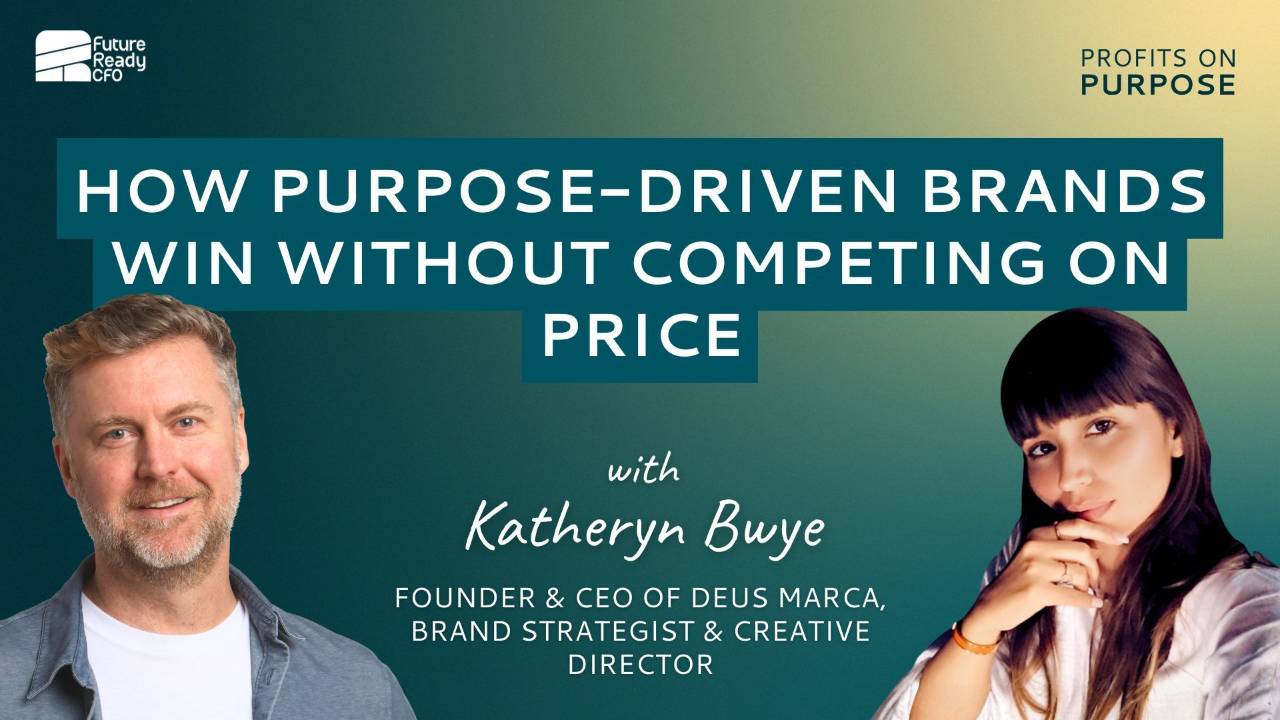
Episode Description
In this episode of Profits on Purpose, host Nate Littlewood speaks with Katheryn Bwye, founder and CEO of Deus Marca, about the importance of branding for purpose-driven businesses. Katheryn shares her journey from art school to building a brand consultancy, emphasizing that branding is more than just visual design; it's a strategic advantage. They discuss the brand operating system, the ROI of investing in branding, and how to integrate purpose into a brand's narrative. Katheryn also addresses the challenges of running a purpose-driven business and the impact of AI on branding.
Key Takeaways
- Branding is a strategic moat and competitive advantage.
- The brand operating system is essential for effective branding.
- Investing in branding can lead to significant ROI.
- Purpose-driven brands must communicate their value authentically.
- Branding is an ongoing process that evolves with the business.
- Understanding your audience is key to effective storytelling.
- Quality relationships are crucial for business success.
- AI presents both opportunities and challenges for branding.
- Founders should proactively invest in branding before pain points arise.
- Branding should reflect the founder's values and mission.
See More from Katheryn and Deus Marca
Listen to the full episode to discover how Katheryn's experiences can inspire and guide you on your entrepreneurial journey. Don't forget to subscribe for more insightful conversations!
I hope you enjoy this episode!
Give it a like, share, and subscribe to not miss the content coming your way weekly.
– Nate and the Profits on Purpose podcast team




Transcript
-----
00:00 Introduction to Profits on Purpose
02:01 Kat Bwye's Journey to Branding Expertise
06:01 Understanding the Brand Operating System
12:12 The Importance of Brand Strategy
18:02 Investing in Branding: The Business Case
23:04 Intertwining Purpose with Branding
27:43 The Essence of Authentic Branding
31:42 Navigating Client Alignment and Values
34:12 Challenges of Running a Purpose-Driven Business
37:08 AI's Impact on Branding and Business
40:11 Measuring Success: KPIs in Branding
-----
Nate Littlewood (00:06)
Welcome back to Profits on Purpose, which is a podcast for e-comm and CPG founders who are looking to scale their businesses, both profitably and purposefully. My name is Nate Littlewood. I'm your host today. I'm from Future Ready CFO, which is the go-to fractional CFO solution for seven figure founders who are looking to turn financial chaos and confusion into business clarity and confidence.
Anyway, today's guest is Kat Bwye who is the founder and CEO of Deus Marca, which is a brand consultancy and design studio for purpose driven founders and leaders. Kat has spent over 15 years in the creative industry and is now focused on helping purpose driven founders turn their businesses into resilient brands.
Along the way, she's worked with everyone from scrappy startups to global organizations like Disney, British Airways, and USAID. But probably Kat's biggest career highlight is actually working on the branding for Future Ready CFO. So next time you are on the Future Ready CFO website, if you like the look of what we've done there, then Kat is your lady.
Anyway, what sets Kat apart is her belief that branding isn't just about good visual design. It's a strategic moat, a force multiplier, and a competitive advantage that most founders are often leaving on the table. So Kat, really glad to have you on the show today. Looking forward to chatting about all things branding and brand building. Welcome.
Well, listen, we're really here today to talk about you and all your expertise. So why don't we start off with talking a little bit about your background and how you got into doing what you're doing. Walk me through how you went from design school to building the business you're now working on and specializing in purpose-driven brands.
Katheryn Bwye (02:16)
Yeah, yeah. So I have basically been doing this. No, it sounds cheesy, but my whole life. I think my North Star was always very clear as a kid. I was always looking for solutions to the problems to do with social and environmental impact. I didn't have the vocabulary then, but I'd see an injustice and be like, I need to do something about this, you know, just from very little, whether it was like a bake sale, raising money to like adopt.
an animal through, you know, the World Wildlife Fund magazine or, you know, raising funds through a walkathon for an orphanage or something. I just was always looking for ways to say, how can we be creative, tell a story, rally people together and put it into effect to raise the floor on some issue. And so also very artistically inclined. And so that put me on the path to go to art school in the first place. And
Going there, I realized that visual communication, branding, telling those stories merged with this concept of impact was where I wanted to So it's like I went to school to strengthen the skills and get the experience that I needed to learn the tools, learn all the fundamentals to then be able to take that out into the world. And then what I did is, so when I went to school for that, I realized a lot of gaps as well in that process. I was like, all right, I'll fix that when I'm out of school. And then I actually joined
the whole founder crowd by jumping in and starting my own brick and mortar business. So I had my own products. I had a like a DIY T-shirt custom T-shirt store. And it was this idea of like merging together, you know, a local community project where, know, percentage of our profits would go to that project, bringing in artists, artists would create all this artwork that would go on the T-shirts and it had all of the ingredients so that I could
Nate Littlewood (03:58)
OOF
Katheryn Bwye (04:20)
the model of what I wanted to see out there in the world. Then, you know, as one does in their first business made all of the classic mistakes, you know, just like all of them. And that is what really started to foster my empathy for founders and entrepreneurs. And I was like, why did somebody stop me? And that eventually that led me to bring that into the workplace. I started working as like a
art director, creative director, marketing person, social media person, all of the different hats inside of another company managing different brands. And then getting out of that, I tied all of those pieces together. And I was like, okay, I understand the founder's struggle. I understand the entrepreneurial struggle. I've been with scrappy startups as we've talked about, that one, two, three person operation, trying to figure it out. And I've been in boardrooms with like,
you know, six, seven and eight figure companies and seen that, you know, everybody still shares these similar human problems that can happen. These branding issues, storytelling, missing a North star, not having a communication, like guidance system internally. And it all got factored into like, okay, how do I solve that for Dave Smarga to be able to offer that to people? And then obviously for us, the heart and soul of what we do.
is the social environment aspect is like, I used to be in these companies where they didn't know how to integrate that well into the business. So we helped solve the social and environmental impact, like how to build that into your business in a way that makes sense. And it can be done, you know, for everybody, everybody can take a small step. that's also part of Dave's Mark and how we got here.
Nate Littlewood (05:58)
Sorry.
Interesting, interesting. So one of the things that I remember you talking about a lot when we were working together, was it earlier this year or late last year, was the brand operating system. And I'd love for you to talk a little bit about that, but before you do, my first ever attempt at being a founder, I suspect was like, you know, a lot of people who might be listening to this podcast, I spent, I think 500 bucks to get
you know, a student friend of a friend who was studying graphic design or something or other to come up with some logos, some fonts, colors, put it in, you know, a PDF slide deck for me. I thought, yeah, hey, there you go. I've got my branding done next. But through working with you guys, I came to realize that that's really just the tip of the iceberg. Can you talk a little bit more about
the brand operating systems and why it's so important.
Katheryn Bwye (07:14)
Yes, and I love this question and we're gonna cover a couple of things in here. So, of the iceberg is a perfect description. It's actually one we use all the time to describe that is most people see branding as the logo, the colors, the nice fonts, make it look pretty, right? As we had that conversation before off camera, it's like, oh, it's just this veneer. They don't realize it is just the tip of the iceberg. Underneath all of that is the real work.
brand strategy. Underneath that, you've got voice identity, like what is the persona, the archetype of this brand. You've got understanding your marketplace, you've got positioning, you've got the messaging, signaling, you've got your core values that should be driving your company. If you remember when we did your process, we did that little compass, right? Vision at the top, values at the bottom, your voice, and then your visuals. And so all of that is what informs everything.
So it's the typical question that I think most people have is isn't branding just the logo and identity and we have to go through this whole process explaining this. second part of that question, the brand operating system, right? The boss is how do you take all of that and put it into a system, a framework that you and your growing team can use, right? And that's
That's a newer concept that's more available to people than it used to be. So the industry and industry itself has changed so much. It used to be that a larger company would have, so I'll talk large first and then we can go back to like starting Scrappy and the $500 logo in a moment.
It used to be that a larger company would have like an art department, their marketing department, sales, products, all those different pieces. And if it wasn't a department, they at least had somebody they were working with or a vendor or something like that. And if you needed to put something into action, let's say you needed to create a marketing campaign, you wanted to do a promotion, even more recently, you needed to do something for social media, you needed to respond to something, you needed to update your packaging, new numbers on a sell sheet, whatever it was.
You'd have to put in this request into the art department or call up your graphic designer or the studio or the agency you were synced with to have them do that. Right? So there's a lot of like pieces in that puzzle. Now in today's world, we've got these amazing new platforms and tools where things have become so much more accessible. You don't need to have somebody who understands the Adobe Creative Suite. You know, you can have an intern take something well built.
Right? Or a virtual assistant or, you know, somebody who's, you know, your, your new, sidekick, know, and the smaller companies come in and say, Hey, we've got this whole system in place. Let's put it into motion, whatever that looks like. So it's the system is made up of these four different pieces. Right? There's your identity hub. That is what we've just talked about. The logos, your photography, your icons, all the different ingredients.
that make up the visual aspects of your brand. So all of that needs to go into like an organizing system where you can kind of drag and drop, click and all of this to make your materials look on brand. Then there's the governance aspect of that. Those are your brand guidelines. You could have photo guidelines, you can have packaging guidelines, you can have social media guidelines. There's guidance and manuals for everything under the sun now, just depending on how complex you need to be.
And then there's nowadays also something newer is templates. Now there's existing templates that can kind of like rub people the wrong way because there's so many available, just, you know, generic templates out there. But what you want to have for yourself now are your own custom branded templates that work uniquely to your needs, that look and feel like yours designed by professionals, this and that, but that give you the power to then put into use. You've been doing this great with future ready, right? Like you've been taking.
all of the templates, all of the bots that we set up to you and being able to distribute it amongst your team to create everything from like YouTube thumbnails, right? To podcasts like marketing. And then of course there's the management system. So actually having a well-organized folder system, labeling system that lives on these platforms, an incredible platform right now, like Canva. It's very useful for all sized businesses.
but then also having it stored on a cloud, stored on a hard drive, this, that, and the other to protect all of your work. So that's the boss. And a lot of people don't realize that all of that management, all of that system, that framework is there to support you in the long term. And that should be able to expand over time. Now to circle back real quick to that 300 logo.
Nate Littlewood (12:17)
500,
thank you very much. Bestia, go on. What do think I am, a tight ass or something?
Katheryn Bwye (12:25)
$500 logo, this is classic, right? And it's not wrong. Like it's what you did is great. Like you don't, it goes back to the original thing of like a brand is not a logo. Like in your case, you're the brand. The vision is the brand. What you were trying to offer someone that is different. The point of difference is the brand, the experience people get. like Nate, you at the end of the day are always Nate and future ready CFO.
is reflective of you. And so that has to come across in these visuals. Now did it at first, when we first came across your brand, it didn't match you, right? Like I think we can agree what you had there was just kind of more generic. We couldn't get to you, but if you show up on a phone call and we have a conversation like this guy's great. I want to work with Nate, right? And so we don't care about the website. I don't care about your logo, right? So, but you're, what you're having to do is a lot more selling at that point.
So if you start there, it's fine when you're in test mode, MVP, you're scrappy, you're just like, I need something to get out there. You get out there and what's going to happen between the $500 logo, the $5,000, you know, mini identity kit, the $15,000 strategy and blueprint, the, you know, $25,000 to $50,000 rebrand is what it will carry you over. Whatever you've invested will get you to a point.
which you'll then start outgrowing yourself, right? And then you're like, okay, time to do it again. So it's never a one and done. It's an ongoing process.
Nate Littlewood (14:03)
Yep. Yep. I love that. One thing I would add as a, I guess, customer of your product is that I really appreciated how much easier it made it for me to make decisions about future products and evolutions and expansions of my products and services. Because I have this document that kind of describes now who I...
who I am, what's unique about my approach, who I'm serving. And it's very easy to kind of filter new ideas through that. any bright, shiny object that might otherwise distract me and pull me off in different directions, I can kind of run it through this. And it's like, yeah, actually, no, that's not something that Future Ready is meant to be doing. So let's put that down, because it's not consistent with the brand.
I have really appreciated it as, you know, a filter, if you will, for what the brand should or shouldn't be doing. so I just wanted to add, throw that in the mix there as well. You know, I work with obviously a range of different, you know, ECOM and CPG founders. And I'd say there's a bit of, you know, the, the bit of a spectrum in terms of how they've, invested in branding and the brand identities that they've built. mean, some of them are
candidly, you know, basically producing fairly commodity types of products and haven't invested a lot. others are taking it really seriously and you know, they might be from a branding background and you know, they can do it themselves and they've done a really good job. I'd love to hear your thoughts on the ROI of investing in brand and how can an early stage bootstrap founder
without a lot of money, right? Like they're struggling to round up whatever, $10,000 or $20,000 even for the next production run. Like how can someone like that justify investing in brand?
Katheryn Bwye (16:03)
Yeah, this is a it's it's a big question because it's so like you were saying, it's so different for each person. Right. And. All right. So it's super different for each person, and it's one of those questions that you can only answer when you're talking one on one with what those pain points are. Right. So we were talking about that.
that growth, you're gonna start to hit a certain ceiling. You're gonna start to feel certain symptoms in the business that are gonna create friction, drag, chaos inside. You're not gonna be able to respond to things a certain way. You're gonna be distracted by these shiny objects, right? And there's all different ways that things can sort of like start to pull apart if you don't have a clear brand strategy. Like you were just talking about, you have...
this guide now that every time you're innovating a product, every time you're thinking about what your next marketing engine is going to be, you can first go look at the brand and say, hey, is this right for me? Is this aligned with my values? this that the vision before I invest in more design, which always happens, you're updating your design on things like, is it still on brand? Is it still representative of where I am and where I'm going? So the ROI is very unique.
to each person. I think the biggest thing you have to ask yourself is when does avoiding it start costing you more? So this can look like a few different ways. It can look like inner frustration that you know you have the superior product or service of offering to certain competitors, but that they keep winning and you're not. You're like, why are they growing and I'm not?
could be a branding issue, be multiple issues. Maybe you're not great at sales, maybe you have a marketing problem, but sometimes it's a branding thing. You don't realize you're not positioned the same way. You don't realize you're not messaging correctly. So it's costing you sales. It's costing you opportunities. You might be getting rejected in potential partnerships where people are kind of ghosting you. want to, know, partnerships are a great way to grow, whether that's collaboration, promotions, whether it's aligning and sharing, you know, clientele.
And if people are kind of giving like not interested, maybe it's a branding issue. So that could be hurting you and then, or if you're shrinking like leadership, we're talking off camera about the human aspect of business. Like at the end of the day, it's humans working with humans. Do I like you? Do I trust you? Do I want to do business with you? Do I want to constantly be on the phone with you? Whatever that relationship looks like can also be.
Influence without you knowing by your branding if you kind of shrink when you show up or you make excuses like I'm you know Get like let me talk to him forget the website, you know Let me get on a phone with somebody because the website isn't working for me Those kind of things affect your confidence So you're naturally not doing a great job at communicating sales networking all of those pieces, right? So if you find yourself making excuses, it's costing you There's
many other areas like that. the big overarching answer is, is it hurting you to not be working on your branding? You have all these blind spots as well.
And then when to make the decision on that can also depend on multiple factors, but it's also why we did, for example, with you, the brand map, right? Before you go and start diagnosing things and like, I have a website problem and you know, it's conversions. get a, you know, 200 hits a day, but we're only getting one sale. It's gotta be the website. It's gotta be the SEO before you start spending money and freaking out on all of that stuff. You might want to step back and ask these deeper questions of alignment. Right.
Nate Littlewood (20:04)
Okay.
Katheryn Bwye (20:04)
to
answer the question. It's been hard.
Nate Littlewood (20:08)
Yeah, it does. But I guess what I'm hearing is that, especially if you're a first time founder and you haven't lived the experience of trying to run a business that has a weak or non-existent brand, then you're not really going to realize based on the, you know, the explanation that you just offered.
You're not going to realize that you need to invest in branding until kind of it's too late. Like you've already started to feel the pain and symptoms of it. I guess what I am curious about is if there might be a more proactive way to think about this and perhaps get ahead of it and say, okay, I may not have invested in it to date, but what are some of the things that we could be looking at in the future or on the
horizon to know, okay, this is actually something that we need to investing now before I run into this, you know, these pain points.
Katheryn Bwye (21:09)
I know and this is where it's just like our industry has done an injustice I think to entrepreneurs and not offering enough education and there's a lot more now about how important branding is and how it's kind of the heart of everything. And I would say for people who have already hit that pain point.
It's one of those things where it's like you're to have to just like bite it and at least do light brand strategy. There's all kinds of levels of strategy. You can get really deep into it or you can at least start scratching the surface of the positioning yourself the messaging really getting in deep with who you're trying to target. Who's your customer? Are you being of service to them? And then what's missing in that that that you're not getting obviously your competitive analysis. So there's
If you can at least find a brand strategist to do light brand strategy with you at that point, I think it can be the thing that turns things around for you. One of the things to think about again, and this is, this is educational. don't know if it supports someone who's already in the thick of it is founders need to realize that they're already constantly being
affected by branding, whether they know it or not. So there's these classic examples of like a watch, right? I could have a Rolex on or I could have a Casio on. They're both going to tell me time their primary function for these like commodity brands that we're talking about. They have a function. It's to tell time. That's the main thing, but they represent completely different worlds, lifestyles, attract different people. So they command different pricing and different value, right?
Otherwise, if you just had two Casio's next to each other, right, or it's just two products without any kind of story, they're just going to be fighting on pricing. They're just like, who can throw the most money? I guess, you know, who can just put the most product and it's the fight to the bottom of the pricing. This goes for everything, right? It's cars, you know, look how many cars, vehicles we have out there. You've got Jeep, you've got, know, the Lamborghini, you've got a Camry, you've got a Mini Cooper. They're all
doing the same primary function, getting someone from A to B, it's their brand that sets them apart. So if you're a new founder, if you haven't yet fallen into the deep end of feeling all those pain points, you got to really ask yourself like, what do I stand for? Who am I for? Why does it matter to them? How can I become go to for that audience and then speak into their pain points, make them under like,
Let them know you understand their fears, empathize with them and then present your solution in the right way and do it authentically. mean, there's, there's so many pieces to that, but. Before this would, would say the biggest thing if again, if you're already in it before you do anything, these are the biggest mistakes that I see is before you're like, I just need a new logo or I need a new website. And you start going down that path backtrack.
Nate Littlewood (24:01)
Yeah, yeah.
Katheryn Bwye (24:19)
your money's better in a mini blueprint, a little mini brand strategy before you do that. It'll map it out and then it'll tell you, hey, this is your biggest pain point. You can't see it because you're working close to it, but it's actually this. If you flip the story or if you become a founder led brand instead, or if you lean into this audience that you're totally neglecting, but people, then at least be like, all right, I can make some quick fixes. And the strategy should inform you to say, work on this first and then work on that. And then hopefully you can figure it out.
monetarily wise.
Nate Littlewood (24:50)
Interesting. Interesting. So I want to ask you a question about intertwining or combining purpose and, you know, a mission inside a brand. was actually having a conversation with a another, prospective podcast guest yesterday about this. And, I shared this story about when I first started my, my own, brand, company called urban life, which is an econ business. And we were very.
rooted in kind of environmental and sustainability causes was super important to me. And I could see a path to, you know, making progress on these sorts of topics through, you know, pushing our products and growing this business. However, the mistake that I made, I think in hindsight, and this is what I'd love to get your opinion on, is that early on, at least, we kind of led with purpose.
And we said, hey, like the food system sucks. There's all these problems with it. This is why, you know, it's not working, you know, bad, bad, bad. Therefore, hey, look at our shiny product, come over and buy from us. Like we have a solution to this thing that we just kind of tried to make you feel guilty about. Anyway, needless to say that approach to marketing was not very fruitful and we subsequently changed it quite a lot.
As someone who kind of specializes in working with purpose-led brands, what are some of the best practices for intertwining purpose into a brand and what are some of the biggest mistakes that you see people make?
Katheryn Bwye (26:25)
Yeah, these are all great questions. I wish there was like silver bullet answers to that. I do recall your brand and us having a conversation about that and me doing, you know, some research on on where you were back then. And it is a common mistake. And also, it's like, you were a little ahead of your time, I think, too, on on pitching that I think there's a lot
More people right now who are tuned into wanting change, who are seeking purpose driven solutions, who are expecting and demanding more from industry and the storytelling around how you do it. Cause it's funny, you said, you know, we were making them feel guilty while pitching the solution, right? That comes down to that voice and that personality and knowing your audience and being like, okay, I, you can have different narratives. Like that narrative might've worked.
for a certain type of audience. And it may not have even been your end user. It may have been partners. It may have been other people who are driven by the same purpose. But then what would be the story for the actual person? How are you solving a problem for them? How are you giving them the better solution? Why does it matter to them? So I'm glad you flipped your marketing. I'm curious what it was. I don't know that story arc as to what happened and how the conversions actually mapped out.
Nate Littlewood (27:48)
Speaking of stories, I'm not sure if I ever put this in front of you, but I'd love to get your response to something. once came up with the definition of a brand as a story that you tell consumers or customers to convince them to pay more for your product or service than a commodity equivalent is otherwise worth. Do you agree or disagree with that and why?
Katheryn Bwye (28:17)
Yeah, I feel like you've where did you I might have read that on one of your posts and I might have been like I'm gonna talk to him about this one
Nate Littlewood (28:27)
Well, the world's listening now, Kat. Let loose.
Katheryn Bwye (28:32)
I was like, no, no, Nate. So I mean, you're, but you're not, you're not wrong. You're actually not wrong. Like, I wish I had like two perfect examples. Like, let's go back to the cars and the watches or these two vessels for beverages, right? Like both of these can contain a beverage. And if you comment me with that idea of like, Hey, you know, why did you pay 20 bucks for this mug?
you know, versus $2 for this glass, right? They both hold liquid, right? And it's like, and then let's say if this was hand painted and handcrafted by an artist and that I really, really admire and I just love their artwork. And so I paid $50 for it. It's, it's the human factor, you know, it's the story we put our money and our time and our attention to things that make us feel alive.
Nate Littlewood (29:18)
Yeah.
Katheryn Bwye (29:29)
that connect to our art, that get us excited, that represent our identity, you know, and that matters more to some people than not. The idea though, the word shouldn't be convinced. You shouldn't have to convince someone to pay more. That's where you're losing the like authenticity, which is such a like buzzword, but it's just, it is a key word for doing a better job of switching from selling and convincing.
to servicing and providing something to somebody that they want, that they value. Right? And if you can get honest with yourself, what it is you're selling or offering and communicate that value to the person they should want to put more value towards it, whatever that looks like, right? Whether it's spending more time with you, spending their hard earned dollars, it's because there's a real story there.
And if there's not, you're stuck in the like price fight, right? You're just, it's about cheapest thing. So yeah, the branding is, it's a beautiful artful way of expressing our human existence here. Cause none of us have to be doing any of this. Like none of us have to have painted, put paint on our walls, have a shirt that isn't, you know,
some t-shirt that we wear day in day out or have these specific earrings or have the iPods that you have or you know, the choices that we make are all just the living expression of who we are, how we connect to each other and how we work with, who we attract, right? So it's that identity buy-in as well of if I dress a certain way, carry myself a certain way, present myself a certain way, I am naturally going to start attracting different people into my life, repelling other people.
And that goes with my products and services and everything that's in my orbit.
Nate Littlewood (31:29)
I hear you. hear you. It's clear, I think to anyone that talks to you Kat, how much you care about, you know, purpose and impact and the things and the people that you have in your life.
Katheryn Bwye (31:31)
So, and now, now it comes up and there's our ideal client. There's the clients that we like to work with who deeply care about that triple bottom line, the people, planet, profit. And they are actively looking for ways to be in business, have a sustainable business, economic speaking, right? Not just the environment part.
but then they're also looking for how they can be more responsible in those areas and looking to us to help support, figure that out. And those clients, the clients that care to make the effort are our favorite, no matter where they are in the journey. Like, do you at least care enough to try? Then let's figure it out together. Let's make those tweaks, whether they're small steps or deeps. The people that we absolutely say no to now,
are the ones who don't even care, who aren't interested, who see it as fluff, who aren't motivated to that. We don't even really attract them as much anymore. So I think in our own branding and messaging, we are naturally repelling those clients. And if anybody has come to us, this happened recently, somebody came to us recently who wasn't one of those fits, it was just a tech company, you know, doing tech stuff, but they're not even thinking about social and environmental impact. not trying to change anything. You know, they're just in, you know, let's make money and let's have an exit and...
I'll be happy afterwards. And what happens with them is they almost naturally X themselves out. They start to see our content. They see how we talk and they're like, this isn't a good fit, you know? And so if we can't inspire them to integrate something positive, then we just naturally don't like they don't move on to the next phase. And we don't force them to move on to the next phase. We're not like chasing them. We're like, let's let that go. And it's fine.
You just have to be okay with the nose, you know, and seeing it truly the North Star. I we have a very clear North Star for our business.
Nate Littlewood (33:46)
Yeah. Well, speaking of your business, I have a couple of questions I'd like to run by you. What is the thing that you're struggling with the most in running your own business right now, which from what I understand is spread across LA and you're physically in Peru, right? Yeah. So spread across LA and Peru, Cat and Cat.
What are you struggling with the most in terms of building your brand and business right now?
Katheryn Bwye (34:17)
Yeah. goodness. There's multiple things, but I would say mainly it's that plate spinning, right? Trying to wear, we're wearing multiple hats. So I find it funny when we're like, when we had to pick titles, I was like, I guess CEO, but it's like, you could have like the 10 titles underneath of all the different that we're doing, you know, administrate and
We were our own secretaries for a while. do have a VA now. We had two, but you're doing the bookkeeping at a certain point until you can delegate. So I think for us, it's been about having to, because we didn't have any funding. We just jumped into servicing, right? Like we didn't come in with some capital or, you know, somebody backing us up. We're just like, let's service people. And so we've built our business based on every client that we've won.
A lot of it's gone right back into the business and proving things. yeah, wearing all of the hats and trying to get off that wheel of making enough so that we can then delegate and say, how can we grow this team thoughtfully without bloating it and having overhead costs that then end up just passing off to the client? Like, how can we stay flexible, nimble and ourselves and start to delegate in a smart way so that we can keep focusing on what we do best?
And that's been a tricky transition. The second part that's been a big struggle is there's the two ICPs, there's your intended customer profile that you're like, I want to service these people. We know we're a great fit for them. And then there's the actual or the ideal ones where once you're in it, and I think when you and I met, we were talking about this, I was like, I want to help these people because this is who I stand by. And then you get into it and you realize,
I can't grow my business if I continue to work with this demographic as much as I would love to there in a price point or at a level in their journey where they don't need what I bring yet. So we had to solve that. We're hopefully going to release that in 26 where it's like for that, you know, the backbone of America's, I would say, you know, that's like the small business owners, like how can we give them high quality, high caliber, intelligent answers, but at a fraction of the cost, you know, and then also go work.
you know, with this, this like new shift where we've had to go through our own rebranding, our own reposition. Let's work with people who are further along, who could really use us. They're going to see a faster on our way on what we can do and then like find the bridge back. So we've struggled, we've with a lot of the same things our clients do.
Nate Littlewood (36:56)
Yeah. I hear you. How is AI impacting your world and work today? And what are you most excited about from an AI and branding perspective if we look, you know, 12 months out?
Katheryn Bwye (37:13)
And that's kind of where I think we're going right now of like, we care about humanity. We care about the environment. We don't actually need this. If you remember like what we were just talking about, business is about human connection. should be about service. It should be about being good to each other, about solving problems for each other. And if we're going to causing a whole bunch of problems in that process, is it even worth it? So
I'm being very aware, being very cautious. I don't like to be pro or anti. I like to be nuanced in how I approach things, but we're contemplating it. So I'm less excited than I was maybe six to 12 months ago when I saw it as like a tool we could use in the industry as to now, like this is no, I don't care about my particular job, right? I can transform, but what it's going to have an effect on so many other people. Yeah. So.
Nate Littlewood (38:07)
I a lot of time thinking about this.
Katheryn Bwye (38:09)
yeah. Time. It's a it's a major disrupter. There was moments where I was like, we're gonna really go in and with AI and we're gonna you know, I had our team, I told my team, I was like, we need to study these platforms, these programs, I want to integrate, we started to integrate it. And then the more I kept looking at the environmental aspect, what it's doing to like small towns, you know, these rural towns and how it's like taking over people who are responsible for our food, like farming towns, like this is our food.
We're going to put a big data center next to where people are farming and like pollute all of the water and make their lives miserable. So I have major moral, ethical, battles going on right now with it. And then how do we take the bull by the horns and be leaders in this space and, see what happens, you know, but we're also, we don't, we're not massive, you know, like what we can only do so much. So I'm being very like,
observant of this and deciding if we're going to pull a big, like we are the human company, you know, we're a hundred percent not. I don't know. We're literally going to have December is going to be the hot topic in our.
Nate Littlewood (39:18)
That'd be a pretty unique value proposition if you came out and said, Hey, we're a hundred percent old school. Do it all the human way. No, hear interesting. That's certainly an overwhelming, very easy to get overwhelmed by topics like this. I go, know, in and out of it phases where I get very excited and I try to build and innovate and, then it's just so hard to keep up and, you know, feel, feel with it.
Yeah, we are. We It's a lot, but good luck. I'm not sure what else we can do at this point, but good luck to everyone out there navigating your AI challenges.
Kat, do you want to do the KPI question or do you want me to let you off the hook with that one?
Katheryn Bwye (40:10)
Yeah, go for it. We have time.
Nate Littlewood (40:13)
All right. So Kat asked about this earlier, everyone. she's a branding person. She's a bit different to the folks we normally get on here. But I didn't want to make her feel left out. So the question I'm going to ask her is about KPI in business metrics, which I've started asking all of my guests recently. What is your favorite business performance metric or KPI? How often do you track it? And why?
Katheryn Bwye (40:43)
Yeah. So, you know, while I'm not a numbers person, we have to understand basic numbers, right, for branding to track and see what's working. For me,
And in the line of work that I do and for our company, it's about the quality and the number of solid relationships that we have, right? Like, is why I was, think I made a comment, one of your things like not everything could fit into spreadsheets, but it can. we started to build, we started to build a few little spreadsheets out where we're like, you know what, let's do this our way. And it's about how, for Deo's Marka, how many clients
can we help really get that clarity and confidence after working with us and getting their brand map? How many of them can stay in businesses that they truly enjoy, right? Versus feeling lost or giving up or wanting to throw the towel in, right? And as far as like tracking, like I said, we've only just started tracking that now.
You know, it's only after I made that comment, you're like, everything can fit in a spreadsheet. was like, you know, maybe he's right. And I was like, let's actually start to measure this. So, um, that's important to us because everything else, you know, we're, we're not fully responsible for like the success of the actual business. If they don't have good sales, if, know, some competitor comes in, something disrupts them, like who are, know, the, brand is not a silver bullet. can only build resilience in for them. It can help them stand out. can.
protect their reputation and it can do all these things. yeah, KPI relationships and that happiness and joy that people can keep while doing what they do.
Nate Littlewood (42:27)
Cool. I love that. Love that. Well, Kat, where should people go if they would like to learn more about you and your work and potentially chat about working with you? Where would you like to send them?
Okay, perfect. Well, Kat, it's been an absolute pleasure as always chatting with you. I always enjoy our conversations and thank you for humoring all my nerdy questions today about branding and sharing your expertise and knowledge with the audience here. Yeah, good luck with battling AI in 2026 and yeah, I'll look forward to our next catch up. Take care.
Katheryn Bwye (43:33)
I got it. Thank you so much, Nate. Thanks for having me and thanks for another great conversation.
Nate Littlewood (43:40)
Of course. Take care.
Katheryn Bwye (43:42)
Bye.
Want more like this?
Join our newsletter list and every Thursday morning you can look forward to actionable insights and free tools for scaling your brand.
We hate SPAM. We will never sell your information, for any reason.
