
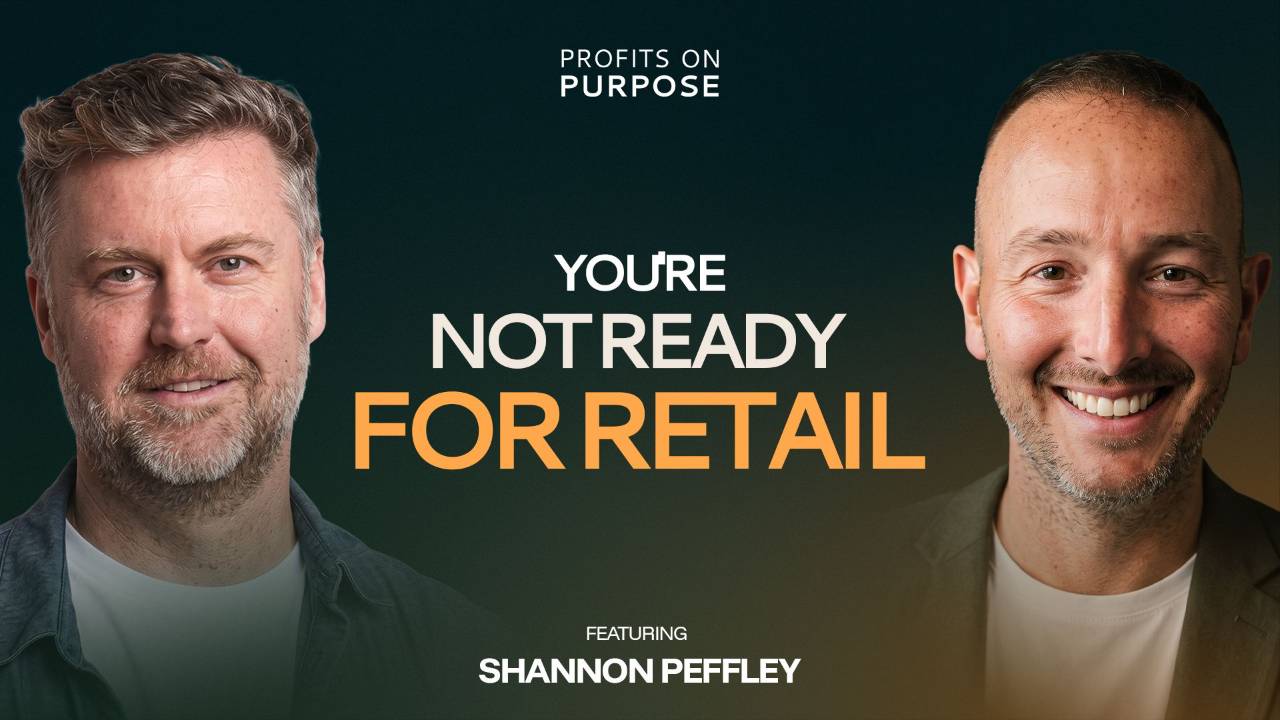
Episode Description
Shannon Peffley was born into CPG. His grandparents owned grocery stores and his father still runs a distribution business. In 2012 he started his own brand, a gluten-free bakery, before gluten-free was really a thing. He built it fast: a 6,500 square foot facility, fully vertically integrated, making 50,000 to 60,000 brownies a month as a co-manufacturer and delivering fresh product to 160 Giant Food stores two to three times a week. Then he had to shut it down.
The final blow was a broker deal with a co-manufacturer that went badly. But Shannon is clear that wasn't the real reason. In his twenties, he thought he knew all the answers. People offered help and financing, and he turned them down. Underneath the ego was a cash problem he never got ahead of. By the time he got paid for one delivery, he had already delivered six or seven more, with the ingredients and payroll for all of them already out the door.
Today Shannon runs CPGX, the platform he wishes he had as a founder. In this episode he and Nate get into what retail really costs before the first PO is paid, why he has the "you're not ready for retail" conversation almost every day, why trade show ROI is so hard to measure, and how CPGX is building a more affordable trade show that shares its profits with the brands that exhibit.
Key Takeaways
- Founders are often their own biggest problem. Shannon turned down help and financing because he thought he had to know everything. His advice to his younger self: find someone doing what you want to do, ask for help, and be honest about where you're struggling.
- Retail can drain your cash before you get paid once. Delivering fresh product to 160 stores several times a week meant he had paid for six or seven deliveries before the first invoice cleared. Growth without cash in the bank isn't growth. It's a timing problem waiting to break the business.
- Small retail costs multiply fast. A $250 per store fee for a shipper display sounds manageable until it's across 100 stores, and you also have to supply each shipper at $20 to $23. Whole Foods wants free fill of every SKU in every store before you're paid a cent. Run the full numbers, not the per-store number.
- Go deep before you go wide. Shannon's rule of thumb is to build DTC to $500,000 to $1 million before chasing retail. That gives you cash flow to fund retail and customer data to pitch with. And launch with four SKUs, not 37.
- A trade show is rarely where the deal really happens. If Whole Foods offers you a deal at Expo West, there's a good chance it wasn't the first time they'd seen you. Trade shows are a valuable touch point, but go with a clear goal, talk to everyone, and only spend what you can afford.
- Lower unit costs can still cost you more. Scaling might drop packaging from 15 cents to 10 cents, but you have to buy twice as much to get there. Marketing, sales and distribution costs rise as you grow. And too many founders never factor in paying themselves.
See More:




Want more like this?
Join our newsletter list and every Thursday morning you can look forward to actionable insights and free tools for scaling your brand.
We hate SPAM. We will never sell your information, for any reason.
