
Overcoming Adversity and Claiming Your Second Chance | Spencer Oberg | Prospera Ventures & Sunday Supper | Profits on Purpose
Dec 10, 2025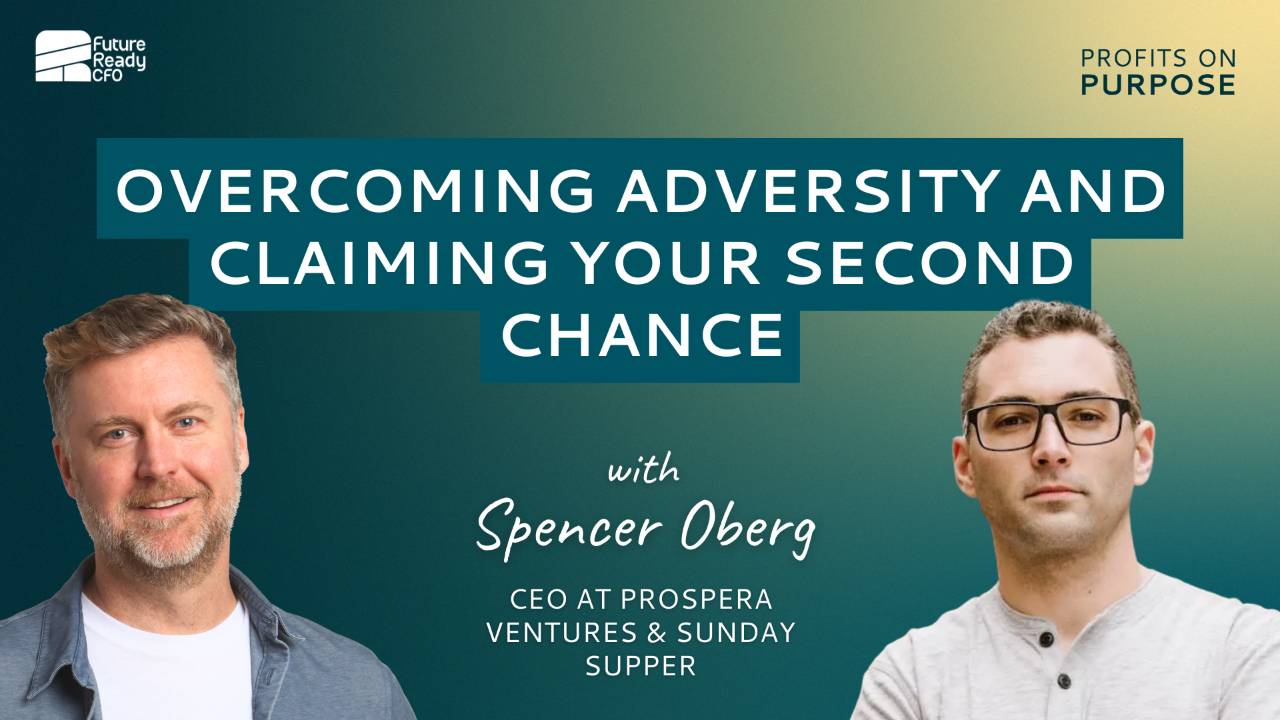
Episode Description
In this powerful episode of Profits on Purpose, host Nate Littlewood sits down with Spencer Oberg, a true testament to overcoming adversity and the power of second chances. Spencer shares his remarkable, candid journey from incarceration to becoming a successful entrepreneur in the highly competitive plant-based food industry.
Spencer walks us through his transformative years in prison - a period of intense personal growth where he dedicated himself to education and ignited his entrepreneurial spirit after connecting with influential figures. He then dives into the challenging yet rewarding experience of being on the founding team for Good Planet Foods, detailing the intricate process of scaling businesses to a $22 million revenue and the necessary business lessons learned from navigating complex venture capital dynamics.
From the mindset of a successful founder to the complexities of a CEO, Spencer discusses the future of the food industry through his new ventures, Prospera Ventures (acquiring and optimizing profitable food businesses) and Sunday Supper (a new branding and manufacturing project). This episode is a masterclass in leadership, strategic shifts, and the crucial distinction between startup culture and professionalization.
Key Takeaways
- Spencer Oberg turned his life around after serving time in prison.
- Education was a key focus during Spencer's time in prison.
- Spencer's entrepreneurial spirit was ignited by influential figures he met in prison.
- Good Planet Foods grew rapidly, reaching $22 million in revenue.
- Navigating the challenges of venture capital was a significant learning experience for Spencer.
- The importance of balancing startup culture with professionalization in business.
- Spencer learned valuable lessons from missed opportunities with major retailers.
- Prospera Ventures was founded to acquire and optimize profitable food businesses.
- Sunday Supper represents a new venture combining branding and manufacturing expertise.
- Understanding the differences between a founder and a CEO is crucial for business success.
See More from Spencer and Prospera Ventures & Sunday Supper
Prospera Ventures:
Sunday Supper:
Listen to the full episode to discover how Spencer's experiences can inspire and guide you on your entrepreneurial journey. Don't forget to subscribe for more insightful conversations!
I hope you enjoy this episode!
Give it a like, share, and subscribe to not miss the content coming your way weekly.
– Nate and the Profits on Purpose podcast team




Transcript
-----
00:00 From Prison to Purpose: Spencer's Journey
12:04 Building Good Planet Foods: The Entrepreneurial Leap
23:56 Lessons Learned in Scaling a Business
29:37 Navigating the Balance Between Startup and Professionalism
34:08 Revenue Challenges and Strategic Shifts
41:00 The Birth of Prospera Ventures
46:00 Building Partnerships: Sunday Supper and Branding
51:16 The Distinction Between Founder and CEO
-----
Nate Littlewood (00:00)
Welcome to Profits on Purpose, the podcast for EECOM and CPG founders who are looking to scale their businesses, both profitably and purposefully. I'm your host, Nate Littlewood from Future Ready CFO, which is a go-to fractional CFO solution for seven figure founders who are looking to turn financial chaos and confusion into clarity and confidence. Today's guest is Spencer Oberg, who I am...
gonna go out on a limb and say, it's probably one of the most remarkable backstories I think of any guest I've had on this show to date. At 21, Spencer was sentenced to prison, but instead of letting prison define him, he used his eight years there to earn college degrees, deliver a TEDx talk.
and launch an entrepreneurship program for incarcerated individuals called Harness Your Hustle. Upon his release, Spencer joined the founding team of Good Planet Foods, which is a plant-based cheese company he built from nothing to $22 million in revenue and also raised about $22 million in VC capital along the way. He learned some hard lessons about over-professionalizing too early
navigating VC pressure and the brutal reality of post COVID headwinds in the plant based category. After leaving Good Planet in 2024, Spencer co-founded Prospera Ventures with his wife Bianca and they now buy and roll up profitable food manufacturing businesses. He also serves as the CEO of Sunday Supper, which is actually how he and I originally got connected.
But Sunday Supper is an amazing plant-based frozen Italian food company that's scaling incredibly rapidly from what I understand. From the wrong side of the tracks to building multiple eight figure businesses, Spencer's journey is about second chances. It's about hard won wisdom and the courage to keep building even when the odds are stacked against you.
Spencer, my friend, welcome to the show. It is so great to have you on here.
Spencer Oberg (02:22)
Thank you, Nate, it's a pleasure to be.
Nate Littlewood (02:25)
Of course. Well, I want to get started with talking about your backstory, if that's okay. From what I understand, you spent eight years in prison starting at the age of just 21. Can you walk us through what happened and how you made the decision to become the person you are today?
Spencer Oberg (02:41)
Correct.
I'm happy to. I'll try to keep it to the 50,000 foot-ish view. It's a bit of a long story if we dive into the details, but if I can suffice it to say that I grew up in kind of a not so well-to-do area. We were pretty poor. I was an only child and my dad, bless his heart, worked nights, so didn't see him much.
So the guys that I looked up to as friends, Ro models, ultimately were making money, hustling on the side, selling drugs. And so ultimately that's the path that I took. I managed to still kind of juggle both sides of the tracks, if you will, to mix metaphors, I guess. and you know, managed to get through most of school and still keep up that persona that, you know, I was still kind of a straight laced good student, but on the side.
Nate Littlewood (03:32)
Mm-hmm.
Spencer Oberg (03:49)
I was making money, selling weed, selling drugs, starting at a pretty young age. And ultimately, fast forward to 18, 19, 20, I had actually gotten hurt on a job and one of my doctors prescribed me enough Oxycontin to essentially kill a horse looking back at it. It's pretty amazing how much.
Nate Littlewood (03:56)
Mm-hmm.
Spencer Oberg (04:16)
Like at least in that era, the medical profession was, was prescribing to folks who were injured and in pain. And because of my, you know, my background hustle and stuff on the side, didn't take me very long to figure out that I could make quite a bit of money on the, extra supply that I was getting. And that ultimately blew up into a relatively large enterprise, if you will, and caught up to me.
Nate Littlewood (04:42)
Mm-hmm.
Spencer Oberg (04:45)
So, you know, by the time I was, after my 21st birthday, I was facing quite a few different felony charges just surrounding that, that lifestyle. And, you know, what ultimately the underlying piece of it was selling, selling drugs. And during like dirt towards the end, I guess of that little run, when I was getting relatively close to having to face the music, that a few things happen like getting robbed.
Nate Littlewood (04:53)
Mm-hmm.
Spencer Oberg (05:14)
and shot at point blank still, you know, other than maybe there being a higher power, not sure how I didn't actually get struck by that bullet. you know, and a few other things that really made me realize that I had a choice, you know, I could either keep doing what I was doing and end up dead, or I already knew I was going to have to do prison time, but you know, end up in prison for life maybe, or I had to figure out a different way. So, you know, when I ultimately got sentenced,
Nate Littlewood (05:23)
Mm-hmm.
Mm-hmm.
Mm-hmm. Mm-hmm. Mm.
Spencer Oberg (05:43)
which ended up being a 10 year sentence, I decided I had no clue how I was going to do it, but I decided I was going to turn the next seven to 10 years, depending on if I was, you know, got good behavior or whatever, and turn that into a positive and, and build something positive out of it. And really like the only way that I could think of to do that is to continue my education. My grandparents had a
Nate Littlewood (05:46)
Mm-hmm.
Hmm.
Mm-hmm.
Mm-hmm.
Spencer Oberg (06:12)
pretty decent influence on my life and like he was a doctor, world renowned doctor and you know, very, a very big proponent of education. So that was the only thing I could think of. So I decided that I was going to figure out how to get a college degree. That was really challenging, turns out really hard to do in prison, but managed to do that and do quite a few other interesting things while I was in there. But yeah, it was really those kind of, you know, the near death experiences that kind of
Nate Littlewood (06:17)
Mm-hmm.
Spencer Oberg (06:42)
Shook me a little bit woke me up to the fact that I needed to do things differently
Nate Littlewood (06:47)
Mm-hmm. Wow. Yeah, a lot of people, I guess, who found themselves in that situation would have, you know, run the danger, I'm sure, of going off on a completely different trajectory. But you clearly managed to turn things around for yourself in a pretty big way. You mentioned the near-death experience a couple of times, but like...
I understand that was kind of the catalyst, but how did you kind of decide that you wanted to go down this entrepreneurial business path? How did you get to that point?
Spencer Oberg (07:27)
You know, I had always kind of looked up to entrepreneurs, especially famous entrepreneurs, you know, like the, guess it was still a little bit early in the growth phase of it, but you know, like the, the Facebooks, Mark Zuckerberg's, et cetera. And so they were always kind of like my, I guess, quote unquote heroes. I never really conceptualized myself as
a business person though, or as an entrepreneur. And I think what really helped that click for me as I guess there were quite a few different encounters in particular throughout my journey in prison. But I can point to three that were really, really impactful. There were three different guys who on three different occasions throughout my sentence,
Nate Littlewood (07:59)
Hmm.
Spencer Oberg (08:26)
came in as part of a one program or another that I was involved in to speak. The first one of them by the name of Joe, very successful local businessman here in the Seattle area and like professor of law, CPA, just, you know, a total bad-ass in business, if you will. And he told us that, you know, you guys are, first of all,
Nate Littlewood (08:39)
Mm-hmm.
Spencer Oberg (08:56)
You are businessmen. Think about it. selling and hustling drugs, you've got product, you have sales, marketing, supply chain, customer service. You have to figure out your margins. Like you can take all of the things that you've been doing just kind of innately and learn how to do them legitimately. And not only that, you're kind of, you know, entrepreneurs by necessity because a business owner himself, he was like, you know,
Nate Littlewood (09:05)
Mm-hmm.
Mm-hmm. Mm-hmm.
Mm-hmm.
Mm-hmm.
Spencer Oberg (09:25)
I come in here and volunteer my time because I love you guys and I believe in you. But if I'm looking at someone who's got a criminal record on paper versus a college graduate who doesn't, you know, it's just, it's human nature. You're at a significant disadvantage. So if you want to get out and be successful, really, you need to be an entrepreneur and you need to pursue being a business person. The second person that shared that was an essentially, you know, a very similar narrative, but he kind of added one piece that really helped.
Nate Littlewood (09:28)
Hmm.
Mm-hmm.
Hmm.
Spencer Oberg (09:54)
you know, help solidify for me that I wasn't so different from these guys that I was, you know, really looking up to and idolizing. His name was Jim and he was a fortune 500 CEO of a bunch of different companies throughout his career. And he echoed essentially the same sentiments that Joe did and said, know, you guys are businessmen and you can, you know, you can take what you know, innately and learn the skills to really apply it. But not only that, you really know different from me.
Nate Littlewood (10:16)
Mm-hmm.
Spencer Oberg (10:23)
But for the grace of God, I would have been sitting right where you are. They would have pulled me over when I had that ounce of coke in my trunk in college. Who knows? Who knows what would have happened? So that really, it started to help shift my perspective. Like, okay, maybe I can do this. And then what really solidified it is when I met David. David came in a little bit further along in my sentence and shared his story. And David Israel. This is David Israel who...
Nate Littlewood (10:26)
Hmm.
Mm-hmm. Yeah.
Yeah.
Mm-hmm.
This is David Israel. Uh-huh.
Okay.
Spencer Oberg (10:51)
ultimately
would become, pardon me, would become my partner in Good Planet Foods. He came in actually as a guest of one of these other guys I was talking about and shared his story. And his story for the company that he was running at the time was that he had written the business plan while he was serving a four-year sentence in prison. He wrote the business plan, got out, made the product, raised the capital.
Nate Littlewood (11:02)
Mm-hmm.
Spencer Oberg (11:18)
and built what turned into an international brand and very successful snack company. And so I just really solidified, like this dude proved it. He's done it and I can do it too. And I kind of latched onto him a little bit as he was walking out. It's like, hey, I really want to do what you've done. Can I stay in touch with you? And he made the mistake of saying yes.
Nate Littlewood (11:25)
Hmm.
Mm-hmm. Yeah.
Mistake or good fortune maybe depends on the perspective. Well, let's talk about that. I'd love to understand that transition from your time in prison to getting out and getting started on Good Planet Foods with David. What was it like going out?
Spencer Oberg (11:45)
Yeah, maybe. Yeah.
Nate Littlewood (12:04)
into the real world and going straight into running a venture-backed CPG business. That's a huge change. Talk me through that transition and some of the things that you were dealing with at the time.
Spencer Oberg (12:20)
Yeah, it is a huge transition. And I mean, it really all started with David giving me what at the time amounted to just a job while I was in work release. Yeah, I was as as part of the transition out of the Washington prison system. Some guys are fortunate enough to go to basically like a halfway house or transitional unit.
Nate Littlewood (12:34)
Mm-hmm.
Spencer Oberg (12:47)
where you can actually go out into the community and start earning some money to try to support yourself when you're actually officially released. And because he and I had kept in touch, it so happened that he had transitioned out of the operations of Pop Gourmet, which was the snack company that I mentioned a few minutes ago, and was looking to do something else.
Nate Littlewood (12:48)
Mm-hmm.
Mm-hmm.
Mm-hmm.
Spencer Oberg (13:13)
He had apparently fallen in love with CPG and the food industry in general, but like me, he was a bit of a health nut and wanted to do something more in the better for you food space. and he, at the time I was getting out of work release, he wasn't even sure what that looked like, just that, you know, he was going to build something new and, asked me if I was, you know, willing to basically do whatever and, know, come
Nate Littlewood (13:18)
Mm-hmm.
Hmm.
Spencer Oberg (13:43)
come work with them. And I said, a hundred percent, you know, I, I at that point kind of idolized him and what he did. And I really just wanted to work with the guy and learn from him. So I joined and just taking a job. I remember the first, the first task that I had was putting together a bunch of cubicles that he had brought from Pop Gourmet, you know? So, I mean, it was, it was literally bare bones startup office cubicles. Yeah.
Nate Littlewood (13:44)
Mm-hmm.
Hmm.
Okay.
Okay. Like office cubicles. Right. Okay.
Spencer Oberg (14:12)
built a bunch of office cubicles so that we had, you know, places for the big company that we were going to build, which we didn't end up needing those cubicles. So that's another story. I ended up having to take them down at some point too, but, you know, so it didn't, right. So it didn't start out as, know, like this, an official partnership or anything like that. was just David giving me an opportunity while I was in work release. And so I joined and
Nate Littlewood (14:19)
Yeah.
So choose Startup Life.
Spencer Oberg (14:42)
And we weren't venture backed at that point. know, we were just, you we were literally, you know, trying to figure out what the product was going to be. David had some licensing relationships from products that he had built at Pop Gourmet that he brought with him. So some of the stuff that we did early on was working with companies like Hoifeng Sriracha to develop other products using theirs as a base. like
Nate Littlewood (14:59)
Mm-hmm.
Spencer Oberg (15:12)
Hoifang chocolate. I mean, he had already done the chips and the popcorn and everything. There were a few other things that we did after the fact. But, you know, we were literally just searching for that product. And at one point, his sister-in-law, who works as like a fashionista for the stars in Hollywood, said, you really need to innovate in vegan cheese. And David wasn't vegan and loved cheese. So he's like,
Nate Littlewood (15:36)
Mm-hmm.
Spencer Oberg (15:40)
Why the hell would I do that? And she's like, no, no, no, you it's terrible. There's a, you know, there's a huge need. You need to look at it. So we did. We dove in and looked into, you know, the market. and it just so happened that the plant based segment of food in general was the fastest growing. And then within that, it happened to be the plant based cheese and plant based alternatives to dairy.
Nate Littlewood (15:42)
Hahaha
Spencer Oberg (16:09)
were the fastest growing within that category. So, you know, one thing led to another and that is ultimately what we focused on, chose to, you focus on. And that's what became Good Planet Foods. And, you know, throughout this whole process, really, I was just executing, figuring out how to get things done, building the crazy ideas that David came up with and including cubicles.
Nate Littlewood (16:12)
Mm-hmm.
Mm-hmm. Mm-hmm.
Mm-hmm.
Spencer Oberg (16:39)
You know, along the way, he saw the value in what I brought to the partnership and offered that to me, offered, you know, true partnership in the company and in what ultimately became Good Planet. And so, you know, looking back on it, he said, like, what was it like to jump into a venture-backed startup? Like, it was a whirlwind for sure. And it was fun.
Nate Littlewood (16:55)
Hmm.
Spencer Oberg (17:07)
and exhilarating, like I got to learn and figure new stuff out every day. And I got to do it in an environment where I didn't, yeah, I could just be me and, you know, and, work with somebody that I really respected to try to build something cool. And it just so happened that I'm lactose intolerant. So I actually resonated a lot with the product personally.
Nate Littlewood (17:11)
Mm-hmm.
That's amazing.
Okay, well, it worked
out well. What a story, amazing. I wanna go back just a minute or so. You said that he saw something in you which led that to him ultimately offering you an official partnership in the business. What did he say?
Spencer Oberg (17:53)
That's a, that's a good question. And I don't want to put words in his mouth. Um, but I think that he saw that he might, might've even seen a little bit of himself, frankly. Um, because he saw somebody who was hungry and were really willing to work hard and do whatever it took to get things done. Um, and somebody who is
Nate Littlewood (18:08)
Hmm.
Mm-hmm.
Hmm.
Spencer Oberg (18:23)
smart enough to figure things out, but at the same time also, definitely not arrogant. had no room to be arrogant in that space because I'd never been in CPG before. Right. So it was really, but honestly, I think it was a huge part of it was the work ethic and. And my ability to problem solve and, kind of be a little bit of the yin to his yang. David's a
Nate Littlewood (18:32)
Hmm. Mm-hmm.
Mm-hmm.
Mm-hmm.
Spencer Oberg (18:52)
You know, very much a visionary and, you know, networker. And he, he can, you know, execute and do the operations piece of it and, actually, you know, put the nuts and bolts together to build things, but it's not his favorite place to operate. Candidly. I don't know that it's my favorite place either, but I have that ability too. And I did it very well. So I think he saw.
Nate Littlewood (19:07)
Mm. Mm-hmm. Mm-hmm.
Mm-hmm.
Spencer Oberg (19:21)
what ended up, I think it was a very good and successful partnership with him. The way that he always framed it was he can go do what he does well and just trust me to handle everything pretty much.
Nate Littlewood (19:33)
Mm-hmm.
Sounds like a very, very solid partnership. I'd love to learn a little bit more about the journey of building the business as well. You mentioned earlier that you guys got to 22 million in revenue, I think, and you'd also raised about 22 million in VC money. Tell me a bit more about some of the highlights of the actual building process and what were some of the biggest lessons you learned along the
Spencer Oberg (20:08)
Man, so many. So we ultimately got to that roughly 22 million in revenue in about four years, maybe a little under. So we were growing very quickly. And to get to that 22 million, we actually only raised about 12 at that stage. So through the series, through the friends and family and angels, and then the series A's.
Nate Littlewood (20:29)
Mm-hmm. Okay.
Spencer Oberg (20:37)
I believe right around 12 million bucks, which that was a masterclass in and of itself for me. You I had never raised capital before. So to, you know, have a front row seat into essentially help David do that and learn all about what that process looks like was, I mean, an MBA and in venture finance, at least it feels like it. But so
Nate Littlewood (20:54)
Hmm.
Absolutely. Yeah.
Spencer Oberg (21:06)
You know, early on, it was very much all hands on deck and growing very rapidly with a relatively small team. I think we were about five of us that got it least very close to the 22 million mark.
Nate Littlewood (21:28)
Five
people. That's phenomenal.
Spencer Oberg (21:30)
Yeah, give or take.
Depending on what stage we were at, was a few more, a few less, things ebbed and flowed a little bit. when I remember distinctly, I think it was actually our lead investors, I was working with some of their operating team and they asked me, what was it like to build something this big, that quickly?
Honestly, my response was I just put my head down and worked and next thing I knew I looked up and this is where we were because it was such a whirlwind. It really felt like that in the moment. you know, early on we my wife joined us very early. She was, I don't know, number four, I think. And and helped us start, you know, putting some systems.
Nate Littlewood (22:08)
Hmm.
Mm-hmm.
Mm-hmm.
Spencer Oberg (22:27)
and processes in place to support that growth. Because I think one of the things that was challenging for us, and for me in particular, I had never scaled anything to that size or that quickly, it was managing the amount of activity going on between developing products, launching new products into retail, launching products into food service.
launching retail products for our different retail partners like Whole Foods 365, Kroger Simple Truth, Trader Joe's, managing all these different brands in addition to ours, our own Good Planet brand, and trying to build that and do marketing and actual new sales and trade shows. And there's just so many things going on that we were all kind of handling all at once.
that building the systems to support those and turn it into a real business, a machine was very challenging and something that I think we kind of had to take a couple of steps back and do, especially once we brought on a more seasoned CPG team or started to build a more seasoned CPG team after our series A. Just a good example is just a good
Nate Littlewood (23:26)
Hmm.
Spencer Oberg (23:56)
ERP system. So, know, so the thing that you really need in order to manage all those different brands and SKUs and customers that I was mentioning, we didn't even really have have something that was solid or or working correctly, you know, until we were darn near at that 20 million mark. So in the very beginning, it was it was a total whirlwind. And then and then I think there were some serious growing pains.
Nate Littlewood (23:58)
Mm-hmm.
Spencer Oberg (24:25)
you know, getting some of those systems and processes really solidified and in place. And, and I would say that, you know, looking back on it for me, I'll speak for myself, but I think this probably goes for the larger part of the team. Cause we were all relatively inexperienced in the CPG space early, earlier on David had, you know, his experience with, with popcorn may, but he also has just been an entrepreneur his whole life. He didn't come from, you know, the CPG.
Nate Littlewood (24:45)
Mm-hmm.
Spencer Oberg (24:54)
space prior to that. So we were all relatively naive when it comes to the nuances of CPG. And, you know, I think that was both a blessing and a curse. You know, our, our ignorance was good in that we didn't realize that, you're not supposed to be able to do it that way. Or, you know, you really need to go through all of these steps or have this marketing program in place for this retailer or whatever. You know, we just attacked it head on and got it done.
Nate Littlewood (24:56)
Mm-hmm.
Hmm.
Mm-hmm.
Spencer Oberg (25:24)
but it was also a little bit of a curse and kind of came back to bite us on a couple of those larger customers or larger opportunities because we didn't do the process the right way. Kroger is a perfect example that sticks out in my mind with our brand. you know, we didn't understand all the nuances of doing business with Kroger as a brand. So we could, I firmly believe we could have gotten national placement with Kroger with our good planet brand.
Nate Littlewood (25:37)
Okay.
Spencer Oberg (25:54)
which would have been just a massive boost for the overall multiple of the valuation of the company. But we missed that opportunity and that window of time that ultimately did become a fleeting window of time because of the macro plant-based environment, which we can touch on later. But we missed out on that because we weren't experts and didn't have that CPG expertise to lean on.
Nate Littlewood (26:22)
Mm-hmm.
Just to clarify that, are you referring to the window of opportunity that Kroger would have had for pitching or receiving pitches or placements from new products or is there a bit more to it than that?
Spencer Oberg (26:26)
You
There's a bit more to it than that because we were able to get the appointment and the meeting with the buyers and David and I went and made the presentation and and they liked the product. But Kroger has some pretty hefty expectations of brands in the way of the brand utilizing some of
Nate Littlewood (26:48)
Mm-hmm.
Mm-hmm.
Spencer Oberg (27:08)
Kroger's own proprietary data insights and marketing programs. They call it like 8451 or something like that. So in that meeting when they asked us what our 8451 plan is, we kind of looked at each other and made a joke about Area 51 and just said, we'll do whatever marketing programs you need us to. But they weren't impressed with that. So they ultimately chose.
Nate Littlewood (27:14)
Mm-hmm.
Mm-hmm.
Spencer Oberg (27:36)
one of our biggest competing brands, Violife, for placement on shelf as the branded placement that they were doing on that review, which their review cycles are only once a year. So we missed out on that year's placement. then with the shift, and I think this COVID had an impact on this, and also,
Nate Littlewood (27:39)
Hmm.
Mm-hmm.
Spencer Oberg (28:05)
I think there were a lot of other kind of macro factors that ultimately played into it. But by the time we got that next review, there were already headwinds that were really coming up against the plant-based and vegan segment in the food and beverage industry overall. And stores were already starting to...
Nate Littlewood (28:23)
Mm-hmm.
Mm-hmm.
Spencer Oberg (28:32)
kind of hold back a little bit on adding more plant-based items to their shelves because they were seeing these things aren't doing the velocities that we expected. The products aren't as good as we thought, you know, et cetera. So there really was that window of opportunity that, that we had to get on shelf and we missed out on it to Violife because we didn't know enough about what we were doing.
Nate Littlewood (28:42)
Mm-hmm.
Mm-hmm.
Yeah, wow, that's, that's gotta hurt, gotta hurt. The other day when we spoke, you...
Spencer Oberg (29:03)
I mean, the
lesson I won't forget.
Nate Littlewood (29:06)
This is true. This is true. And I think that's a great perspective to have. of the best ways to learn is to make mistakes. yeah, I think thinking about entrepreneurship and learning as a sequence of mistakes that you need to make so that you can learn faster is a very valid way to think about things. listen, the other day when we spoke, you mentioned that you
Spencer Oberg (29:10)
Hahaha
Nate Littlewood (29:36)
felt you made the mistake of professionalizing or hiring professional CPG executives maybe a little bit too early or that you over professionalized. Can you unpack that a little bit and tell me what happened?
Spencer Oberg (29:54)
Yeah, and I think I alluded to it a little bit just a minute ago because, you know, in hindsight, I feel like there's really a good balance to have. you know, early on, before closing the Series A and ultimately bringing on some of these more tenured and seasoned food and beverage and CPG execs.
Nate Littlewood (30:09)
Mm-hmm.
Spencer Oberg (30:23)
I think we were too far on the side of the spectrum of not of being too startup and entrepreneurial, if that's a way to describe it. And and, you know, not enough, you know, toward the professional side of the spectrum. And then after, you know, closing around and starting to bring on the the professional folks, I think we went too far to that side of the spectrum. And, you know, and it really
Nate Littlewood (30:49)
Mm-hmm, okay.
Spencer Oberg (30:53)
hurt from my point of view, it really hurt the entrepreneurial spirit that had gotten us where we were. You know, I mean, we were able to grow that quickly in that short amount of time because we were somewhat opportunistic in, you know, the things that we, the products that we would, that we would do and the opportunities we would take on. And, you know, I think one of the
Nate Littlewood (31:00)
Mm-hmm. Mm-hmm.
Spencer Oberg (31:24)
one of the downfalls when we brought on the suits, I don't want to call them that because they're really not that bad. So they're good folks and I'll talk a little bit more about that because
Nate Littlewood (31:36)
Hahaha
I know what you mean.
Spencer Oberg (31:46)
It's just interesting because there's a perspective of the co-CEO that we brought on that I think kind of agrees with what I'm saying just maybe from a slightly different point of view. But from my point of view, we became a little bit too corporate, a little bit too worried about pursuing a particular opportunity that maybe wasn't a good planet branded retail opportunity.
And so that I think that really slowed our growth. then coming into the the macro plant based headwinds that everybody in the in the industry faced. I mean, that certainly led to revenue declines and and some some challenges that that the company had to work through later. And so so I think, you know, over skewing to that,
Nate Littlewood (32:38)
Mm-hmm.
Spencer Oberg (32:42)
professional, if you will, side of things or corporate side of things was a big piece of it. And then I just mentioned that something that the co-CEO Bart and I actually talked about a few times and he was the very seasoned CPG professional that we brought on, brilliant guy and very good at what he does. But he shared with me that, you know, looking back, he came in and really
Nate Littlewood (33:01)
Mm-hmm.
Spencer Oberg (33:10)
focused us all in on building a big organization that was posed to reach the revenue goals that we had set, you in order to reach the exit goals that we had set. And the reality of the macro environment is that we just couldn't get there by focusing solely on, you know, the branded retail revenue.
Nate Littlewood (33:15)
Mm-hmm.
Right.
Mm-hmm.
Spencer Oberg (33:40)
So from his point of view, was like, I came in with this thesis and that's what we executed too. And ultimately I was wrong. And I appreciate that perspective. And I think from my point of view, was because we weren't a little bit more toward the middle of that balance between super entrepreneurial and corporate or professional. I think if we would have struck more of that balance and been more nimble.
Nate Littlewood (33:49)
Hmm, interesting, interesting.
Spencer Oberg (34:08)
it might've, we might've fared a little better, but you know, hindsight, 2020.
Nate Littlewood (34:08)
Mm-hmm.
Okay. I
want to circle back on that. Your comment about you might've fared a little bit better, but I just want to make sure I'm leading into this correctly and connecting the right dots here. So I think you said you raised 12 million, which got to you to about 22 million in revenue, but I gather there was a subsequent $10 million raised, but it...
didn't actually grow revenue, I presume, because it coincided with the macro slowdown post-COVID that you're talking about. So I'd love to understand what was going on inside the business when you've just taken on an additional $10 million, you've semi-professionalized the team, obviously have the objective of growing the business. What's going on internally? And what did you mean when you just said,
that you might've fared a bit better if the team were a little more entrepreneurial.
Spencer Oberg (35:15)
So to set the stage a little bit, a good chunk, I would venture to say the majority of our revenue, and don't quote me on an exact percentage because I can't honestly can't pull that out of my memory bank right now, but it was the majority of our revenue that got us to that 22 million was not in Good Planet branded product. It was in
Nate Littlewood (35:37)
Okay.
Okay.
Spencer Oberg (35:44)
private label product. us making a version, though not as good as ours, but a version of our base formula or plant-based cheese formulas for like the Kroger Simple Truth brand, the Whole Foods 365 brand, Trader Joe's, et cetera. And then there were also some other revenue streams in other, what I called trade channels. So.
Nate Littlewood (35:47)
say.
Mm-hmm.
Spencer Oberg (36:11)
like the ingredient
channel, we would sell our product to other manufacturers like Nestle, for example, to use in making pizzas or what have you. And then we would sell it into food service. So for use in restaurants and such. And between those three, private label, food service and ingredient, that made up the majority of our revenue. And when, so when,
Nate Littlewood (36:16)
I see.
Mm-hmm. Okay.
Mm-hmm, okay
Spencer Oberg (36:40)
when we brought on the series A and in order to, especially as a business that doesn't own your own manufacturing, as a CPG brand who's completely co-packed, it's very unusual to have that significant proportion of your revenue, especially coming from private label. So one of the big objectives that we were pushed pretty hard on by our lead fund.
Nate Littlewood (37:03)
Mm-hmm.
Spencer Oberg (37:10)
was to shift the balance of the business. So shift the majority of the revenue over to branded good planet retail product. That way we're really building a brand that can command those kind of exit multiples once you get there, which are significantly higher than just a private label manufacturer. Because in essence, that's what we were, a good chunk of what we had built. That's what we were. So.
Nate Littlewood (37:20)
Mm-hmm.
Right.
Right.
Mm-hmm.
Spencer Oberg (37:39)
That's really where the focus shifted. And we ultimately gave up some of the private label business because it wasn't aligning with our, really our mandate to, for lack of a better word, our objective to grow the Good Planet brand presence, just taking up resources and whether that even just be time and focus from the team.
Nate Littlewood (37:56)
Mm-hmm.
Mm.
Spencer Oberg (38:08)
But it also wasn't profitable enough. We, as another thing that where I think that ignorance came back to bite us, bite me in particular, because I didn't know, we assumed that if we grow the sales quickly and we grow our volume, we can improve our margins. Sure, they're not exactly where they need to be right now early on, but
Nate Littlewood (38:08)
Mm-hmm.
Right.
Hmm.
Spencer Oberg (38:38)
We'll be able to improve them once we get down the road. Well, by the time we went to do that, number one, couldn't get as much of an economy of scale as we thought we would be able to, to boost the margins. And it was at a time where there was a lot more competition coming into the market and our customers, Whole Foods, et cetera, they had choices. When we started, we were really the only game in town with a good product.
Nate Littlewood (38:41)
Mm-hmm.
Mm. Rot.
Spencer Oberg (39:06)
which is the reason why we were able to get all the private label business. But by the time, you know, we really made this shift to lean heavy into the brand, there were enough options out there where we couldn't improve our margins enough. So we ended up losing that, you know, that revenue, which was significant. So yeah, revenue definitely went down and it's, I think it's something that both David and I have kind of
Nate Littlewood (39:20)
Mm-hmm.
Spencer Oberg (39:36)
said in hindsight, you know, we would have pushed a lot harder to keep that revenue and just keep the compressed margins. and so, you know, that's a decision in hindsight that I think, and maybe an example of kind of, what I was alluding to in terms of being more balanced and entrepreneurial, pardon me. And, you know, rather than really drawing that line in the sand and saying, if we can't get X
percent revenue out of this, then we're just going to walk away from the business. But rather being a little bit more flexible and creative on how we possibly could have plotted the path to get there, we wouldn't have lost the five million in revenue or so that was associated with it.
Nate Littlewood (40:25)
Right, right. Wow. So running a private label, plant-based cheese business, you obviously understand the food manufacturing side of things very, very well. You lived firsthand what it's like to not own a brand or not own enough of a brand to be able to kind of protect yourself when things turn against you.
Tell me how that experience played into what you're doing now and Prospera Ventures.
Spencer Oberg (41:00)
I mean, ultimately is the whole catalyst for Prospera Ventures. And I partially anyways, maybe that's the whole catalyst for our current focus of Prospera Ventures. The real catalyst was when my wife and I were, you know, at slightly different times, but both looking at what's going to be next for us when we do transition out of the day to day at Good Planet.
because we knew at some point that was going to be the case sooner or later. know, be it because we built such a great team that effectively they don't need us. And because the business isn't exploding growth like it used to, they're like it used to be. There just isn't, there isn't a justification for us to be focusing on other things really, or justification for our paychecks or whether we sold whatever. Right. So while we were
trying to figure out what we were going to do next, Bianca made me promise no more startups that we needed to figure out how to buy something that was already cashflow positive and use all the things that we learned. Yeah, it is. I know. It was hard.
Nate Littlewood (42:04)
Hahaha
But it's in your DNA by this point. Like you've been doing it your whole life up
until this point,
Spencer Oberg (42:16)
Yes, and even a couple even a couple during the same period of of Good Planet You know, there are a few brands that David and I were involved in early on There's a production company that ultimately grew out of you know The entrepreneurship program that you mentioned that I'd started while I was in prison that that grew out of so, you Yeah, I mean definitely startup was was in in my DNA and I think you know, honestly and hers too at that point but
Nate Littlewood (42:35)
Mm-hmm.
Mm-hmm.
Spencer Oberg (42:47)
It was
such a grind that we were both a little burnt out and needed a break. So I was convinced. So ultimately that's how Prosperous started. And when we started it, it was really starting to look at the, I guess the flip side of the coin, if you will. I think, like I mentioned, we got a serious masterclass in what it's like to
Nate Littlewood (42:53)
Yeah. huh.
Spencer Oberg (43:16)
you know, be more on the venture side of things, or at least on the entrepreneur startup operator venture side of things. And so now, you know, flipping and learning about what the more private equity and, you know, acquiring something that actually makes money instead of burns money, you know what that means and is actually a steeper learning curve than I expected. But one of the things that we learned pretty early on
Nate Littlewood (43:31)
Hmm.
Spencer Oberg (43:44)
is that it's important to, as one of our mentors in the space tells us all the time, to stay in your lane. And to be candid, you know, when we were first transitioning out of Good Planet, we were like, we want to break from food. We're not doing anything in food right now. But the more that we learned, the more that we explored the different industries, the more we realized that number one, we were starting to miss the food aspect of it. And number two, it really had become our lane. You know, not only did
Nate Littlewood (43:52)
Hmm.
Spencer Oberg (44:15)
We enjoy the industry, but like you mentioned, we learned a lot about it. And, you know, we kind of at this point know it like the back of our hand. you know, understanding the, I guess the demographic dynamics of the owners of a lot of the comans that we worked with and the fragmentation in that space and being able to see the opportunities to, you know, to.
Nate Littlewood (44:19)
Hmm.
Right.
Spencer Oberg (44:41)
to take that business that is successful, but to take it and optimize it with our team. And then to even take that coman and layer in the brand part of it so that now not only does the brand control its destiny and has diversified revenue, but the overall organization has diversified revenue, but also that the boost in overall value from the brand. So.
Nate Littlewood (44:47)
Mm-hmm.
Mm-hmm.
Mm-hmm.
Spencer Oberg (45:10)
That is where our whole roll-up thesis came from, is all of our experiences, both working with comands that we sourced from and working with manufacturers that we sold to. And building the brand and obviously the dichotomy that we experienced between the branded sales versus the private label and the other sales, all of which are important, by the way. I think it's super important to have that diversified base, but.
Nate Littlewood (45:17)
Mm-hmm. Mm-hmm. Yep. Yep.
Yeah.
Right, right. I get it. Yeah. Well, it's tight. I like the story. It's a compelling progression. There's one piece missing though. You understand entrepreneurship, you understand manufacturing, you know what happens when you don't have a brand. Let's talk about Sunday Supper and Richard Klein, because he's your branding guy, right?
Tell me how that all got started. How did you guys cross paths and how is it that you're now working with Sunday Supper?
Spencer Oberg (46:00)
Yeah.
Yeah, so Richard was actually one of my customers at Good Planet. And he was what I would consider to be like an ingredient or I called it industrial at the time, customer. So we were selling the product to him, ultimately to his co-manufacturers so that he could make things like, you can see him behind me, but like our.
Nate Littlewood (46:15)
Mm-hmm.
Mm-hmm.
Spencer Oberg (46:35)
lasagnas and everything which are all plant-based. So that's how we initially met and started to build a relationship. I really enjoyed working with Richard just, you know, as a customer. He was certainly one of my better customers to work with, which I had some good customers, but you know how customers can be. So, you know, I just, I had a great experience with him. Yeah. Yeah, I had a great experience and
Nate Littlewood (46:38)
Mm-hmm.
Mm-hmm.
Mm-hmm.
It's okay, we don't need to name them all here.
Spencer Oberg (47:04)
early relationship with him and when he saw basically my update on on LinkedIn that I had transitioned out of the day-to-day I could plan it and started Prospera Ventures, he just reached out and said, what is that? First of all, congratulations. What is that? You know, what are you guys doing? Let's talk. And one thing led to the other and he talked me into coming back into the startup world. And
Nate Littlewood (47:23)
Mm-hmm. Mm-hmm.
Wow, and what
did Bianca think of that?
Spencer Oberg (47:33)
becoming a partner
in Sunday Supper.
Nate Littlewood (47:37)
How did you sell Bianca on this idea?
Spencer Oberg (47:42)
It took a little bit. And honestly, I think it took a little bit to sell both of us. And what ultimately, what ultimately line everything up to make sense for us and kind of our overall strategy is that Sunday Supper is a great brand that has a good foundation. It's definitely a startup and in startup mode, like we're
in the process of raising a seed round, for example, right? So it's still, as of right now, it's still squarely in that venture space. But at least for us, it fit into our overall thesis of taking a great brand and combining that with manufacturing and not just capabilities for that brand, but the diversified revenue streams and cashflow base that you can...
Nate Littlewood (48:15)
Mm-hmm.
Spencer Oberg (48:40)
hopefully already have if you're buying an existing comand. And so it made a lot of sense for us and Richard bought into that overarching vision as part of the growth strategy for Sunday supper and for the bigger roll up picture. ultimately I think we've all kind of come together and aligned with the overarching vision and that's what
Nate Littlewood (48:57)
Mm-hmm.
Spencer Oberg (49:09)
That's ultimately what sold me on jumping in and it's a fantastic brand, a great product. And it has very early promise of being quite successful. And I feel like, you know, I certainly don't know everything and you know, I'm learning a ton every single day still. But I do feel like, you know, some of the experiences and skill sets that I've built that we've built are really
Nate Littlewood (49:12)
Mm-hmm.
Mm-hmm. Yep.
Hmm.
Spencer Oberg (49:38)
helpful to the brand and to Richard. He's obviously a brilliant, brilliant marketer, brilliant brand visionary, but he was quite frankly a lot like us when he dove into building this product. He came from the print marketing and magazine world. He'd built a couple of magazines, successful magazines. So he's new to CPG.
Nate Littlewood (49:41)
Mm-hmm.
Right, right.
Spencer Oberg (50:06)
course he's learned a lot over the last couple of years, you know, combining, think that that great branding and marketing genius, I feel with our kind of operational chops really makes us for a solid foundation for Sunday supper to become something big.
Nate Littlewood (50:15)
Mm-hmm.
And it's an unbelievable product, by the way. I've actually had the pleasure of tasting it a few times at some events, but yeah, big, huge fan. I want to ask you a question that I feel like you're going to have a very interesting view on. A lot of the...
Spencer Oberg (50:32)
Thank you.
Nate Littlewood (50:43)
founders that I work with are, you obviously run have started and are running their own businesses and they, you know, by default also take on the role of CEO and kind of leading or building out a team. As someone who has been a founder a couple of times is now a CEO and has filled that seat once or twice. Can you tell us a little bit about what you think the most important differences are between a founder and a CEO?
Spencer Oberg (51:16)
Hmm, that's I feel like a very nuanced answer that That my viewpoint on it is I mean, maybe this is somewhat true with everything but it's ever evolving Right now I think the the main differences are
Really, the main differences are like, what kind of a CEO are you? And because by default, you kind of have to act as a CEO, at least for a little while, as a founder. And so, you know, what are your strengths? And are you good at getting something from zero to half or one? Or are you better at taking, you know, that vision that's gotten?
Nate Littlewood (51:48)
Mm-hmm. Mm-hmm.
Spencer Oberg (52:04)
sort of brought to life and taking it from one to five and so on. So I think if I had to distill it down to differences, really is that a founder absolutely has to have that vision and has to be maniacally obsessed with seeing that vision come to life. And then the CEO really, and I used to
Nate Littlewood (52:06)
Hmm.
Mm-hmm.
Mm-hmm.
Spencer Oberg (52:33)
Honestly, my vision or my perspective on a CEO has definitely evolved as I guess as I've gotten more experience myself. But I used to think that that was the CEO always has to be the visionary. I think that to a degree, that's true. The CEO does need to have vision and be able to communicate that vision well, even if quite frankly, even if the vision wasn't, you know, there's to begin with, even if it was the founders original vision, they have to be able to
Nate Littlewood (52:40)
Mm-hmm.
Right.
Spencer Oberg (53:02)
you know, to align with it and communicate it well and, you be infectious, I guess, you know, to the, to the rest of the team and galvanize people in that direction. but what's more important is that they can be that, that leader. And then especially a little bit later stage, also a manager and, know, be much more, like systems and processed focused and, and, and more focused on the details, quite frankly.
Nate Littlewood (53:09)
Yeah.
Mm-hmm.
Mm-hmm.
Spencer Oberg (53:32)
Then
the founder, almost by default, can't get mired down in the details. They gotta have that vision and bring it to life. then true CEO needs to be able to take that vision and build a good team around it and make sure that all the nuts and bolts get put together and that the processes that create a true business get built.
Nate Littlewood (53:53)
Hmm.
Yeah,
yeah, yeah. Wow. Well, Spencer, we're going to need to wrap things up pretty quickly. But before we do, where should people go if they would like to learn more?
Spencer Oberg (54:16)
Oh goodness, well if you would like to learn more about this wonderful company that I have the pleasure of leading now, Sunday Supper, you can go to sundaysupper.com and I'm sure there are links there to all the socials. You can also go to our Prospera Ventures website, is weprospera.com. Also there should be links to all the various socials there.
And you can find me on the different social channels. I'm trying to be more active, you know, and have a better presence, but, you know, probably LinkedIn is the best place. me a follow Spencer Oberg would love to connect.
Nate Littlewood (54:59)
Sounds
good. I will include all of those links in the show notes below for anyone who's interested. But Spencer, I had a suspicion coming into this call that we were gonna have an interesting conversation and you have not disappointed. This is one remarkable journey that you've been on. You have an absolutely fascinating life story and...
You know, for all those founders out there who were going through hard times and think the odds are stacked against them, you are a remarkable case study and an example in how to turn your situation around and build something quite fantastic. And I just want to say thank you for coming on and sharing the story with us. Really appreciate it.
Spencer Oberg (55:49)
Well thank you for having me, it was a pleasure.
Nate Littlewood (55:52)
Likewise, well, take care. We'll chat again soon.
Spencer Oberg (55:58)
I look forward to it.
Want more like this?
Join our newsletter list and every Thursday morning you can look forward to actionable insights and free tools for scaling your brand.
We hate SPAM. We will never sell your information, for any reason.
