
Founder to Non-Profit CEO: What Happens After You 'Make It' | Eliza Blank | The Farmlink Project | Profits on Purpose
Dec 03, 2025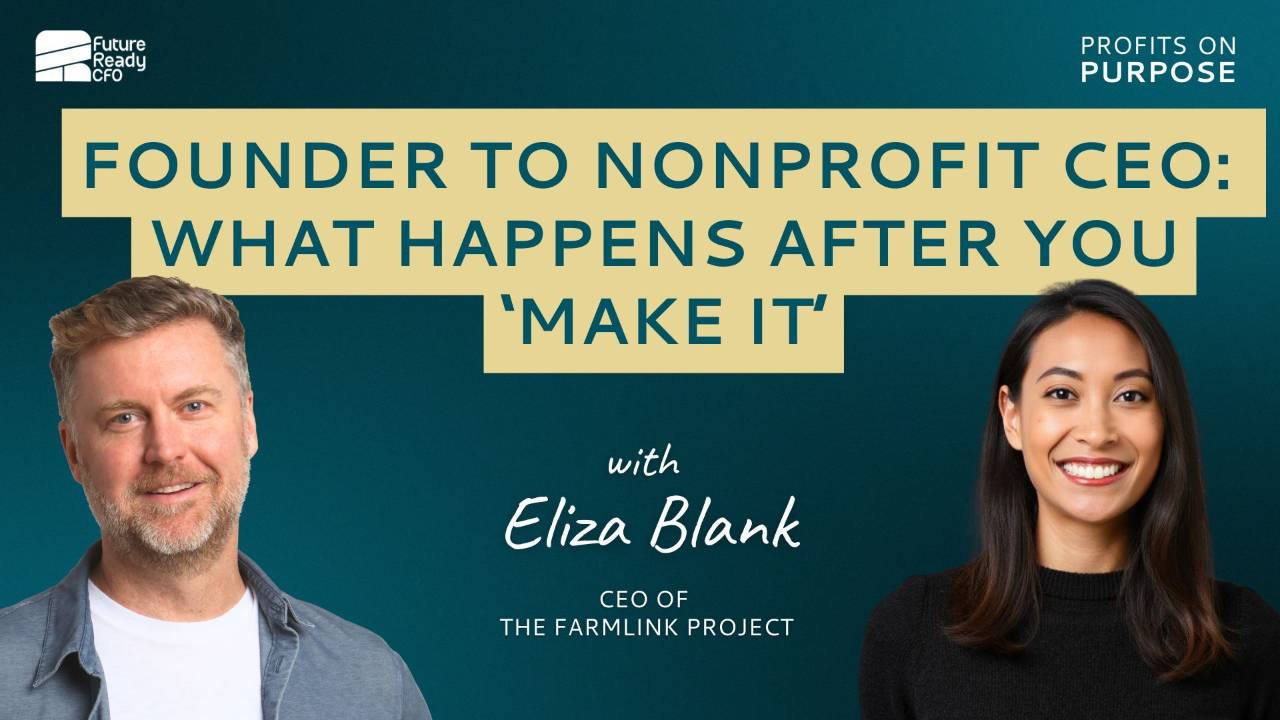
Episode Description
In this episode of Profits on Purpose, host Nate Littlewood interviews Eliza Blank, founder of The Sill and CEO of The Farmlink Project, who shares her journey from launching a successful D2C houseplant brand to transitioning into nonprofit leadership with Farmlink. Eliza discusses the importance of understanding customer behavior, the challenges of retail expansion, and the impact of COVID-19 on business operations. She also reflects on her experiences with crowdfunding, the significance of unit economics, and the unique challenges faced by female founders. Eliza's insights provide valuable lessons for entrepreneurs navigating the complexities of building and scaling a business.
Key Takeaways
- Eliza Blank built The Sill from a Kickstarter campaign to a successful D2C brand.
- Understanding customer behavior is crucial for product positioning.
- Transitioning from CEO to a nonprofit role requires careful planning.
- Retail expansion can provide valuable consumer insights but may not always be sustainable.
- Bootstrapping can lead to innovative solutions and a strong brand identity.
- COVID-19 significantly impacted consumer behavior and business operations.
- Crowdfunding can engage the community and provide alternative funding sources.
- Unit economics are essential for long-term business viability.
- Female founders often face unique challenges in advocating for themselves.
- Current focus is on food rescue and community impact through Farmlink.
See More from Eliza and The Farmlink Project
Listen to the full episode to discover how Eliza's experiences can inspire and guide you on your entrepreneurial journey. Don't forget to subscribe for more insightful conversations!
I hope you enjoy this episode!
Give it a like, share, and subscribe to not miss the content coming your way weekly.
– Nate and the Profits on Purpose podcast team




Transcript
-----
00:00 Introduction to Profits on Purpose Podcast
01:25 Eliza Blank's Journey with The Sill
02:06 New Chapter
05:20 Bootstrapping and Brand Building on a Budget
08:59 Navigating the Financing Journey
16:14 Retail Expansion and Lessons Learned
23:43 Transitioning to a Full Garden Center
26:29 Understanding Consumer Behavior in E-commerce
29:00 The Transition from CEO: A Personal Journey
32:00 Finding the Right Successor
35:00 Navigating Change: Reflections on Timing
38:04 A New Chapter: Joining Farmlink
42:58 Reflections on Life Changes and Legacy
45:27 Advice to My Younger Self
48:04 Understanding Business Metrics
51:19 Current Focus and Future Goals
-----
Nate Littlewood (00:06)
Welcome back to Profits on Purpose, which is a podcast for e-comm and CPG founders who are looking to scale their businesses, both profitably and purposefully. I'm your host, Nate Littlewood from Future Ready CFO, which is the go-to fractional CFO solution for seven figure founders who are looking for help turning financial chaos and confusion into business clarity and confidence.
Anyway, today's guest is Eliza Blank, who spent nearly 12 years building a brand called The Silll from a $12,000 Kickstarter campaign into an eight figure director consumer house plant brand that was basically responsible for creating the plant parent movement. She bootstrapped for the first five years or so, but then went on to raise about $20 million in VC money.
She expanded into 12 retail stores before eventually making a decision to pull back into PureD2C and recently stepped down as the company's CEO to make way for the business's next practice. Nowadays, she's just started as a CEO of the Farmlink project, which is a food rescue nonprofit that's delivered over 400 million pounds of produce to communities in need.
a really fascinating transition from building a consumer brand to leading mission driven work. Today, we're going to be digging into her journey, how she built one of the most trusted and respected brands in the gardening industry, what she learned from her retail expansion, how she knew that it was time to step away from the company that she had founded and what that transition has actually been like behind the scenes.
Eliza, so great to have you here. Welcome to the show.
Eliza Blank (02:06)
I'm so excited to have a conversation with you.
Nate Littlewood (02:09)
Likewise, likewise. Well, listen, I'd love to get started here with talking a little bit about your origin story. You spent a number of years building The Sill from a small Kickstarter into a pretty significant DTC business. If you could turn back the clock to a 26 year old version of yourself when you were just getting started with The Sill.
What was your vision back then and how does that vision compare with what the seal actually went on to become?
Eliza Blank (02:44)
Yeah, well, great question. I am actually really happy to report that my initial vision for The Sill is very much what The Sill looks like today in so many ways. And I don't know how many founders have the opportunity to say that necessarily, but and I would say 26 year old me didn't understand, you know, how the sausage would be made. I don't think
I understand, I understood or appreciated the amount of time, energy for, and even just the things that I did not even know to know yet. And yet The Sill still made it from point A to point B and beyond. And so that initial vision for The Sill was really around creating a consumer category for houseplants in a way that I didn't believe yet existed. And what I mean by that was to bring all of the amazing elements of consumer brands
like having a vision and a mission for an organization and having brand principles or a brand identity or a tone of voice, a personality, having really great creative, having considered distribution channels, all of that. All of that had been applied to so many other categories and yet the house plant felt like a forgotten product.
At the time I was buying house plants, I was in New York City and so I was buying house plants at the corner bodega or I knew that Home Depot would sell house plants, but it wasn't like how I grew up, which is in a suburban neighborhood, getting into the station wagon and driving to the independent garden center. There was none of that in Manhattan. In my 26-year-old mind, I had been working as a
brand manager and in brand strategy and felt like, well, here's a category that is all the deserving of a brand if any category was and yet there wasn't one. So fast forward to today, The Sill is a full-fledged D2C online garden center, which does have this brand. has education, has community, it has a core purpose, it has a tone of voice and a
a consumer base we connect with in a very deliberate manner. So I think in many ways, it's all the things that I'd hoped for. The journey was much different and much longer and loopy than I think I could have anticipated, but the end result is there.
Nate Littlewood (05:26)
Yeah. Okay. Cool. Well, for those, for those who don't know Eliza and I actually go a few years back. I think we first met in maybe 2017 or 2018. Is that right? When I was, yeah. So I, at the time was running a smaller business called, urban leaf and had kind of been looking up to what you guys were doing at The Sill and thought I
Eliza Blank (05:40)
play.
Nate Littlewood (05:53)
You know, I don't know what, but I know there's a lot to learn that we, and we need to understand what these guys were doing. you know, I think anyone who kind of observed what you built there has to have a huge amount of respect to the way that you approached building that brand. especially in your first five years or so, when you were bootstrapped, when you didn't have the benefit of Oudel's amount amounts of VC money. I'd love to know.
You know, from the perspective of an early stage bootstrap founder who doesn't have access to mountains of cash, how do you, how, or how did you go thinking about brand building, you know, on a tight budget?
Eliza Blank (06:37)
Yeah, that's a great question. mean, in so many ways, I think bootstrapping was an unintended positive for the company. I had been surrounded by a peer set of founders who were disrupting big categories like glasses and mattresses and you know, all the folks I'm talking about. And it seemed to me that they were just well-funded right out of the gate. And here I was trying to sell houseplants and I couldn't
I couldn't really gather whether or not institutional capital would be right for me. so ultimately I did it on my own, which is to say that we had this humble little Kickstarter for $12,000, which I remember thinking was amazing and now recognizing in retrospect how little money that was to start a business on and a credit card. And at some point I think we got a small business grant, but the advantage here is this.
You have to create something that actually adds value into someone's life in order for them to trade you their money for your product. And that's a big trade. And so in order to actually make that happen and make it happen again and again and again, you are forced to iterate and to ensure that you have, you know, what they often call product market fit, which if you are financed right out of the gate, it could be years, if not ever that you
recognize whether or not you genuinely have that. Because if all you have to do is spend your ad dollars, you don't really know if what you're delivering adds value or if you're just really good at creative. And so for The Sill, we really had to consider what is it that's missing from our consumers' lives? What can we build that's going to satisfy this? How do we build it in a way that makes meaning in their lives? And how do we become a brand that people want to
celebrate and advocate for.
Nate Littlewood (08:39)
Okay. Interesting. You touched on it a little bit there, but I want to double click and go back onto the financing and kind of access to capital side of things. Cause it, seems to me that the financing journey here was a little bit unusual in that you started with a Kickstarter and then bootstrapped. Fine. Like that's okay. Then we went on to venture capital and I gather you did pretty well at that.
Um, but then eventually went and did a, a WeeFunder crowd, uh, crowdfunding campaign in, in 2023. And no judgment or shade against WeeFunder, but you know, there's certainly a perception, uh, around, around the platform. Um, tell me what did you learn along the way about, you know, the right timing, um, to take capital when is the, when is or isn't a good time to do it?
And if you're willing to share, what was it that prompted the return to crowdfunding after raising that much VC money?
Eliza Blank (09:39)
Yeah, no great question. what I'll say is I had a few early conversations after having started the cell around this question, like how do we finance the business? And I think the fact that I was an unproven founder without a pedigree of sorts, and because I was in a perishable line of product that was less familiar than like traditional CPG,
it wasn't an obvious lamb dunk to investors, like right out of the gate. wasn't like, here's an idea. And some back of the napkin math, like, will you invest? think there was a lot of hesitation initially from the investor community. And the feedback I got was, you know how you raise money? Sell your product. And so that's really how I started to focus on everything that we just discussed.
It took me building actually multiple businesses until I was able to go out and raise institutional capital, one of which was a service business, which The Silll spun off as soon as institutional capital came into the picture. It was actually servicing big offices all across New York by installing plants and then taking care of them. And so it was a bit of a bridge to financing that allowed us to put ourselves
in an environment with the Googles and Twitters and reworks of the world to demonstrate like we can do real business with real headlining brands, even if it wasn't our core business. In so many ways, it was a distraction, but it had cashflow. And so was able to use that service business to float the consumer brand until I was able to go back and say, look what we've built. And at that point, 2017, when we raised institutional capital, we were talking about
You we were already doing about a million and a half in revenue entirely bootstrapped. that got me in the room and that got people paying attention. Only to say that like we had de-risked some of the things that were of concern to investors out of the gate. Now, fast forward $20 million later, we had been through a lot. We had been through COVID. We had been through an environment where consumer investors were losing confidence that they were going to get the types of returns they wanted from
Investing in consumer brands, and we were victim to that cycle as many were. We saw our business entirely take off during coven, as you can imagine, and then come in 2021, we had high expectations that we'd be able to raise our series B and we came to find that investors did not want to assign a value to the organization because they didn't know how much was dependent on.
and how much was really organic from the business. And so we had to expend all of 21 and most of 22 really struggling on the raise that we had done prior to COVID, even though our business was bigger than it had ever been. So coming out of that, now you might have to remind me when we did our WeFunder, the WeFunder campaign came at a moment in time when we really wanted it to do two things.
It was less about the capital and it was more about a re-engagement of our consumer base. And the reason I say that is, you know, the story that I'm telling you happened over the span of like 10 plus years. So the sale had gained a lot of attention, a lot of consumers, a lot of love over the, you know, initial call it seven years of the business. And then at some point you either have to reinvent yourself or have a ton of money to spend or
do something to keep your consumers engaged in the brand. And ultimately, the way I explained it to the team was how do we remind them that we're still here and that we are still doing great work and that we are beloved by our consumers and what is actually a way to give back to the community in a way. I know it sounds sort of backwards because we're raising money, but how do we actually bring everyone who made this brand exceptional?
into the fold. so ownership is sort of a way to do that in a way. And so that was what brought us to the We Fund Our campaign. It was a confluence of things, including being in a position where we weren't raising money from institutional capital investors at that point, but also a way to remind our consumer base that like, we're not going anywhere. We're still here. Thank you for believing in us on day one. It was just a really great platform to tell our story on.
Nate Littlewood (14:21)
Interesting, interesting. So I completely get the evolution there in the story. Let me ask you a question though. What were some of the surprising benefits that came out of the WeFundr? I'm curious to know what house plan owners are like as investors, I guess.
Eliza Blank (14:44)
Well, I think to WeFunders credit is, you know, they do keep, I would say they do manage the process quite well. So, you know, on one hand, it's a platform that allows us to speak to a lot of our customers who want to become investors. On the other hand, it's not like raising typical capital where you're like on, you know, individual email threads, trying to wrangle a close and like get everyone to wire at the same time.
So for that reason, think WeFunder was a good platform for us. A different way to answer that question is the most surprising things was the calls that I got from a lot of strategics. Partners, not even just partners, but potential investors, quite frankly. Folks saw that and thought, what's going on at The Sill?
probably for the same reason that you were sort of alluding to earlier is that, you know, it's sort of a strange thing to get on a crowdfunding campaign when we've raised over $20 million at that point. And so that actually opened the conversation, not only because I was talking about the WeFunder. And so was suggesting to, you know, variety of partners, like, here's an opportunity that you might not have had before. But it also just, it opened the door to interesting and new conversations. So I had
a lot of really good conversations about the future of the business with folks that I don't know that would have come out of, would have come to us organically had we not been doing that.
Nate Littlewood (16:20)
Mm-hmm. Interesting. Cool. So I want to talk about...
the retail business a little bit. my CFO practice, I work with a bunch of econ brands. Some of them are omni-channel and also in retail. I've got one or two who are looking to expand into retail. I've got another who's actually looking to pull back from retail in a pretty big way. You had an interesting kind of foray into this, but it was fairly short-lived from what I gather. So my research said that you
opened up 12 retail stores, but not too long after ended up closing them all and went back to purely D2C. I'm curious, what was the hypothesis going into that? What did you learn once you had it all set up and what was it that drove the retraction?
Eliza Blank (17:16)
Yeah. Well, the one thing I'll say is we actually had retail stores for 10 years. It wasn't as short as it might seem. Now, that's on rolling basis, right? So like we were opening stores over the course of 10 years. So in the end, some of our stores that we ended up closing may have only been open for a couple of years. But in those cases too, we were in the practice of signing very short leases. And so that was sort of our strategic play into retail.
Nate Littlewood (17:22)
okay.
Eliza Blank (17:45)
The the the initial insight is we we opened our first store before I even raised money and so that opened in 2014 and really it was because we needed an office space. If we need an office and you know we were selling these beautiful plants why wouldn't be evaluate opening a ground level office so to speak.
and letting people just like stumble upon us. And so it was a very weird accident that we opened our first store. And as I said, it didn't open as a store, but we evolved it very quickly into one because people started coming and they started showing up. And at that time we'd been building a very large Instagram audience and they were finding out about us through Instagram and then stumbling on our store. They were actually seeking out the store.
And so it was in a way very consumer led that we doubled down into retail and insights that it provided to the organization were sort of unmatched. So if you think about a lot of consumer brands, how they learn about their customers is through surveys and through very impersonal data collection points where you're looking at data in a spreadsheet or you're conducting a consumer survey or you're conducting a focus group.
For us to be in this new category, wanting to innovate on how we communicate with our customers and how we deliver our product and how we talk about our product, all of these things, for us, what we found very quickly was being able to sit in a store and watch our customers shop for our product and engage in conversation with us was unmatched. You could not get that insight in any other format. And so we started opening these stores and it was incredibly novel. This is, again, back in 2014,
there were not dedicated house plant retail stores in urban cities. Like it just didn't really exist in any meaningful way. Certainly there weren't multiples where it was like not just one single sort of independent shop. And so this took off and I think where we got it wrong, if I would even say that, is that we had such big ambition for stores that we quickly hopped coasts.
So I opened two in New York and then immediately went to LA and San Francisco and opened these satellite stores. And the intention was we would backfill in these markets and create multiple stores across these cities. But we kept doing these one-offs as a tool for brand building. On one hand, we wanted to really demonstrate that we were a national brand. And therefore, we had presence in LA, in San Francisco, in Chicago, in Boston, in DC.
And we were seeking a capital partner to help us develop into a much bigger footprint. Like we were talking, you know, is there potential for us to have a hundred stores, 200 stores? And I think that's actually where retail, owned retail becomes really interesting. But at the scale that we were doing it, it was just really hard. Like every store for us had its own unique supply chain. Obviously we needed to have boots on the ground and management in each city.
because we didn't have multiple stores in each market yet, we weren't sharing resources. So it wasn't super efficient. Our most efficient city was New York where we ended up opening five stores. And that was remarkable. And I think for the period that we did have stores and I'm even talking through COVID, you we had to shut down, we reopened and we continued to double down and open stores. It really was meaningful to the company and to the brand. The reason why we moved away from stores ultimately was sort of two reasons. One,
We got into, we came to the decision that the next chapter of The Sill was going to be to expand full garden center, which actually, and this goes back to your first question, was on, call it the vision board or like the five-year plan for The Sill. We just got so hung up on house plans because our customers love them that we never took off into these other arenas, into these other categories, which by the way, much larger from a
addressable market perspective that has the garden.
Nate Littlewood (22:01)
Yeah, just to clarify that when you say full garden center, tell me what that means in terms of products or product categories.
Eliza Blank (22:09)
So if you go on The Silll.com today, you can buy apple trees, can buy hedges, can buy all, you know, can buy soil amendment. You can buy anything that you would find at a garden center. And when we started to make that strategic shift, it became very obvious very quickly that The Silll stores one would never hold this type of assortment and to start to confuse the customer in terms of what The Silll was. So if we
We could have gone two ways. could have tried to make them show multiple ways. We could have tried to make them show room. That didn't really make sense. We could have kept them just houseplants, but that then didn't really reflect the direction that the cell was going. And there was really no world in which we were going to shove a thousand different items into these stores. So that is when we started to say, all right, we're coming up on some of these stores leases needing to be renewed. Let's just start to let those laps and exit and.
See if that continues to develop alongside the strategy and so that's ultimately the direction went. I still am a huge believer in brick and mortar retail, but I do think for the cell strategically that was the right move. Also knowing the way that the way in which we had gone about it right was just it was so dispersed it wasn't using our resources correctly. So like in the end our.com business was so much greater than our store business. It was hard for.
as an example, the marketing team to put as much attention onto an event happening in one market in one store, then work on an email flow for.com. So, and the last thing I'll say about stores is that 12 years into actually, or I should say 10 years into having stores, we were starting to obviously see the market shift, right? And I think we wanted to be really sensitive to, we were, you know,
Nate Littlewood (23:48)
Yeah.
Eliza Blank (24:05)
an anomaly in so many ways, starting off as a plant store and not being a flower shop or not being something else. But fast forward to 2023, 2024, when we decided to close stores, there was lots of plant stores. And in a way, you know, and this sort of corresponds to the conversation we're having around WeFunder. It was The Silll that inspired a lot of people to
open up plant stores and to dedicate their career or shift their career or pivot their career opening doors. And so the last thing we wanted to do in the end was competing against them. Right. So it made more sense for us to consolidate our effort online, let independent plant stores, you know, not have to compete with The Sill and take everything that we learned over that decade from a consumer perspective and make sure that it showed up in a digital experience.
Nate Littlewood (24:38)
Yeah.
So interesting. The point you made about seeing how customers interacted with the product was really interesting. And I'm kind of thinking through like the digital or e-commerce analogy, right? Like people put so much effort into their hot jars and their Microsoft clarity so they can see how people are navigating through their sites. But like when you have a physical store, you can actually see people browsing the whole catalog. Were there any
I mean, looking back to that period, were there any big insights or, you know, particularly memorable lessons that you got from that, may have changed, excuse me, that may have changed how you went about the digital or the e-comm side of the business.
Eliza Blank (25:48)
Yeah. I mean, I think straight away, one of the interesting things, well, there was a few things, right? So, but one of them was how people actually like thought about the product. Like there were, there would be most customers, I should say for the sale, at least, because I would say a lot of our early adopters were not plant proficient. They were there to shop for the planter. And so they wanted to pick out the planter on a shelf and
then choose the plant. And that order of operations was actually really interesting to watch someone kind of go through that process in that moment, as opposed to thinking, they're here to pick out a plant or they're here to have the combination of things already prepotted for them. Opportunity for us to be able to see them and to test very quickly, right? So like, if you think about having an e-commerce website, you know, taking images of your products and
creating a product detail page or a collection theoretically is quick. But like if you want to see if someone's shopping for pots or shopping for plants or picking up the pot first or choosing the pot first or like running the person, you know, who's working the store around trying to find a different size or different color, like that is so much more data than you'll ever know someone browsing even in the heat. The other thing is the types of questions they asked. That was easy to know.
Nate Littlewood (27:15)
Yeah.
Eliza Blank (27:16)
level of knowledge people were coming in with was not known to us until we opened a store and we had customers coming in, one, asking us if the plants were real, two, asking us if they had to water the plants. Really like so rudimentary that we really were able to position ourselves at that very basic level. And that
you know, would we have come to that on our own? I'm not sure. But I do feel like The Sill became this, you know, safe space to come and learn about plants with no judgment, knowing that we will literally teach you how to water a plant and why a plant needs to be watered. And that all came from interfacing with the customer. And in fact, our one of our very popular sort of like taglines or
idioms, if you will, was around Plant Parenthood. And that came from the fact that our customers were walking into our store and talking to us about their plant babies. And we, you know, it was sort of like a strange observation to be like, do all of our customers like talk about their plants as if they're their kids? And then we're like, does that make us plant parents? And I'm telling you, you know, you can fact check me on this, because maybe someone was already coming to this conclusion.
Nate Littlewood (28:37)
Wow.
Eliza Blank (28:42)
But plant mom and plant dad and that whole movement started from The Silll playing back to the customer, what they were already saying. I think one of the most special things about The Silll is aside from brand allegiance, people even today still, you know, use plant parent or like plant mom, plant dad as a identifier. It's like, you know, on your dating profile, like I'm a plant dad that means something to you about who I am.
Nate Littlewood (28:52)
Yeah, wow.
Eliza Blank (29:11)
And I really don't think that existed before the cell.
Nate Littlewood (29:13)
Fascinating. You literally created a movement there. Well, this is probably a good time to start talking about your latest transition, I guess, after inventing or helping give birth to Planned Parenthood and defining an entirely new category in the consumer space.
My understanding is that not so long ago you decided to step down as the CEO of The Sill. I'd love to hear how that came about and how did you know that it was time to do that?
Eliza Blank (29:53)
Yeah, you know, for me, it was a knowing like an inner knowing in the same way that I would describe knowing that I wanted to start the sale. It's, you know, I had I always tell people, you know, when they asked, like, how do how do I know if I should like pursue this idea? And I really felt like I had to pursue the sale. Like there was no other option at this point in my life when I was 26. Because in fact, I had the idea when I was 21.
I had been sitting on this idea for years and years. And finally, was like, I can't not just try it. And maybe that sounds a little bit more cavalier or flippant than exiting a business. But I really got to a point where I was like, I did what I set out to do. I've built this company. I've been through so many different versions of it. I have lived through super wonderful, blissful periods and super stressful agonizing periods.
And, you know, when I thought about the next chapter and like, at that point, you know, do I have another five to seven years here at the cell? was just a very easy answer. It was no, but I had to really, I really had to like, say that out loud. In order to then manifest it right? Because you can't just exit the company that you started it take a tremendous amount of planning and stakeholder alignment and.
You know, all things and so I did have to go through that with my board with my, you investors. I had to who would ultimately like, take the reins of this and it was threading a needle and what it didn't actually prepare before was like, well, I wasn't prepared to, know, to know what was next or to know who I was without the cell. So I would say this was like, more than two year process.
Nate Littlewood (31:51)
Oh, yeah, I can imagine. Well, sticking on, you know, the the parenthood analogy here, I mean, you've been you gave birth to this, you've created a whole movement around it. Like it's your baby. You've you've been its its mother for 12 years. How on earth do you go about finding someone to take over your role as the the parent of something that you've given birth to in that way? Yeah.
Eliza Blank (32:20)
Well, you know, I think I had just a lot of satisfaction with what The Sill had become. And I feel a tremendous amount of gratitude for all of the experiences that I was able to have in growing The Sill and building it and having the trust of so many stakeholders in doing that and having so many people come and join The Sill for so many different periods of their own career. Like I just, I so,
happy again, like, you know, not for like every little moment and every little thing that I've ever done, because certainly that's not what business is like, and certainly not what entrepreneurship is like. But I just felt ready to know that, you know, this was my legacy. And someone who comes in is going to come in with fresh ideas and fresh energy, their own perspective. And if we're aligned, ideal, and if there are things to happen that we're not 100 % aligned on,
I'm also okay with because I am relinquishing things with purpose and intention. And I can walk away knowing that, you know, the part that I impacted, I'm proud of and, know, hopefully it just kind of continues on into perpetuity. Right. And so, know, I answer it all that way. And I got incredibly lucky and not just lucky, like this was hard work.
Adam Smith, who is now at the helm of The Sill, is an incredible operator, has incredible experience in plants, in particular, in the garden. And we are super aligned. You know, even though he's been at the helm, I don't know, for over a year now, I don't know that he's made a decision that I don't agree with. So I'm very satisfied in knowing that I was able to thread this needle to find the right person, to make the good transition.
And now to find myself in a role that I'm incredibly happy to be in. I do find myself lucky, but it was not the like smoothest, easiest path. It was a lot of hard work.
Nate Littlewood (34:24)
Yeah, I bet. bet. And I'm absolutely wanting to talk a little bit more about what you're doing next. this ceasing to be CEO of a company that you founded is a really interesting topic to me. Again, I have a couple of clients who may or may not be going through something similar at the moment. I'm curious if you ever regretted not doing it earlier.
Do you think you did this at the right time or had you ever contemplated, know, maybe I should have done this years ago and.
Eliza Blank (35:00)
I mean, that's a great question because I think that the truth is, is if I could have done it earlier, I would have. I have now heard from many that most people opt to get out of a role, you know, after seven to 10 years. And I believe that. And I was there for close to 12. But the circumstances of where The Silll was and where the market was, it meant that if I had stepped away, I don't
I think the cell would have ceased to exist. And so it was very much my responsibility to steward it to its next chapter and make sure that, that plane landed, if you will. And, and so, yeah, I mean, it was, my last few years of trying to like, actually get that in place was almost my exclusive focus. And I was also lucky enough, to have a COO at the time.
who was basically running the full day to day without me, so that I could focus on that. But yeah, had I had the opportunity, I'm sure I would have absolutely taken it. I mean, I also had two kids throughout this process. So the last two years of trying to make this transition happen, I had just had my second daughter. It was a busy time.
Nate Littlewood (36:23)
Yeah. Yeah. I can imagine now, correct me if I'm wrong here, but I recall that your partner is a entrepreneurial coach or advisor or mentor of sorts. that correct? Steve. Right. So I, I'm going to assume that he was pretty instrumental to this whole transition and, and I'm guessing he played a pretty big part of it. And you, um, you know,
lucky enough to have someone like that in your life. For other founders who might be contemplating something like this, do you have any tips or advice that might help them navigate through a decision like this?
Eliza Blank (37:05)
Yeah. Well, I will say this. I will say, I think the most instrumental thing of having a partner who is a coach is that I trust that process. And so I had my own coach. I would not have my husband coach me because think that would create marital stress. knowing what he does and appreciating what he does and understanding his own network just even amongst coaches, I did have
Nate Littlewood (37:25)
Ha ha.
Eliza Blank (37:35)
I had a coach actually after the transition. didn't have it during the time. And now that you asked me that question, you probably should have. I had a good therapist. That would actually be my advice. Have a good coach, have a good therapist. Try not to put it on your partner because it's a load that probably they should carry. really, know, yeah, I don't know outside of that.
Nate Littlewood (37:43)
Mm-hmm.
Eliza Blank (38:05)
you know what else to say other than you need to feel real alignment and with a therapist or a coach and depending on someone who's going to help you feel aligned with the decisions that you're making and I think I think that's how I got through what I did with such clarity was that I really understood what it is that I needed and wanted and how I was going to pursue it and
And then I was lost for a little after the transition and I got a coach. with and through the work that I did with her is how I ended up where I am today. And I just could not be more satisfied.
Nate Littlewood (38:47)
Wow. Okay. Well, thank you for sharing all that. I do hope others will learn from that. So let's talk about your latest chapter.
Um, you obviously learned a lot through running the cell about the logistics behind shipping plants and living things around the country. Uh, actually read something a couple of days ago about your transition into farm link. And it was kind of drawing a parallel that, well, now you're moving a different type of plant. Um, and, it's still a logistical project. Uh, tell me how did farm link come about? Um, and what was it that attracted you to this role?
Eliza Blank (39:27)
Yeah. Well, I'll be honest with you. I got called by a recruiter, which I had never experienced before. initially, I heard about Farmlink. I looked into it. thought, this is actually kind of interesting. But at the time, I don't actually think I was immediately ready. And we're talking about maybe the span of a few weeks between my first call and my second call.
And that's when I talk about like the work that I did with my coach. And I actually, the other important thing was I read the book, Moral Ambition, and recommend it. It's a very pragmatic narrative around, you know, can we take some of our problem solving skills as entrepreneurs, as founders, as smart people holistically, and apply those skills to like some of the world's
more challenging and more meaningful problems and like what kind of world might we live in if we approached problem solving in that way? Hopefully I'm doing justice to the book, but go read the book. It was very much a call to action for me. And so in all of that, I then started having the conversations with the team and just came to learn about the organization and it felt so familiar to me in many ways. just quickly, Farmlink is a nonprofit.
that was founded in 2020 by a group of college kids who got sent home from campus during COVID. And instead of doing nothing, which is quite frankly, what I imagine I would have done if that was me, they tried to look for a way to contribute. And what they had stumbled on was the fact that the lines at food banks and pantries were longer than they'd ever been. And meanwhile, farmers were being forced to basically plow under perfectly good food.
And this was a bit of a logistics and supply chain issue, but it was just a complete mismatch that was happening during COVID. And so they literally rented a U-Haul truck and started cold calling farmers and picking up produce and delivering it directly to food banks. And fast forward 2025, when they called me, the amount of food that they had then moved, it was like north of 300 million pounds. We are moving millions of pounds.
every single week, nearly a hundred trucks of fresh, healthy food that would otherwise go to waste and moving that into the charitable food system, which this year alone, that has been more needed than anything. the group who started it, as I mentioned, a bunch of students, incredibly entrepreneurial. You know, this is basically a startup. And not only is it a startup, it's at an inflection point that I feel very confident I can help navigate and steward because it's been
This is no different than The Sill at year five, raising institutional capital and saying, great, we're going to go scale. Farmlink is already scaled, but there are so much more room for us to continue to professionalize and scale this organization and have real, continued real meaningful impact, create systems levels to change. I just felt like, how could I not apply this weird set of skills that I've developed over the past decade and put it all in to this organization?
Nate Littlewood (42:48)
Yeah. Fascinating. Fascinating. It sounds like a really interesting transition. I'm curious. A lot of founders I speak with, often point to a pretty significant change in, their personal life events when it comes to pivots and changes in their career that is, you know, a little bit more mission oriented or values oriented, shall we say. whether it
you know, having kids or it could be, you know, a death in the or friend or something. Was there any aspect of that to you? Like did being a young mother, has that kind of swayed the way you think about the future and legacy and impact and that sort of stuff?
Eliza Blank (43:30)
I'd like to say that it was because of my kids, but I think it was turning 40. I turned 40 this year before I joined farmlink. I had already added that I was going to join farmlink, right? And it wasn't like a literal connection. But you know, on my approach to 2025, you know, I was thinking like, okay, you know, this is a big milestone birthday. I'm incredibly proud of everything that I did in my 20s and 30s. What does the next chapter really look
look like for me? And how do I want to create meaning in this, you know, more, I don't want to say more significant chapter, but in a way, what have I been building this, you know, skill set, credibility, network, all of that stuff? What is that? Why building that for? And yeah, and I would say like, that was sort of that turning point of, having to answer that question. And knowing
Also knowing, would say that 26 year old me did not anticipate spending nearly 14 years of my life building the cell. I didn't go into that being like, I'm going to create like a family business and my kids will just take over when I retire. Like that wasn't the intention. so understanding that these, you know, career moves can be huge chunks of your life. You know,
How do we want to spend it? And so I just, think just to answer your question, it was more thinking ahead about legacy.
Nate Littlewood (45:05)
Hmm. Okay. Interesting. Well, you've clearly gathered, you know, many years experience now at, you know, founding a company, being a CEO of a company for well over a decade. You've been through the process of leaving a company and then joining another company. like, you understand by this point a lot about the role of a founder and a CEO. If you
could take all of that knowledge and wisdom, everything you've learned over the last 14 plus years and go back and talk to 26 year old Eliza and say, Hey kid, sit down. I've got some advice to give you. What would you say to her?
Eliza Blank (45:49)
I mean, anything that I would say would sound like a cliche. think, don't know if I can think of anything novel that people haven't heard before, but...
Nate Littlewood (45:57)
Kiss.
Eliza Blank (46:09)
I would say to myself that I matter in the equation. I think, I think 26 year old me probably didn't equate for myself enough. And I think this is probably an issue that a lot of founders, a lot of female founders probably often face of like, how do you advocate for yourself? I don't think there's enough
support for female founders when it comes to everything from negotiating terms on a deal to negotiating with employees to just understanding your own value. Even when you are the founder and CEO of a company, it is very easy to succumb to this idea that everyone around you is doing you a favor. that, you know, a perfect example is like, I was never the highest pay person at my company. And like,
One might say like, well, that makes sense because you have equity and this and that, But I have a hard time thinking in retrospect, was that the right move? Should I've actually been compensating myself more? And yes, I was bringing in experts in their own field here and there. I could rattle off a bunch of reasons. But that's just one example of what I try and go back and suggest to myself.
The reality is, is the organization doesn't exist without you. So what does that mean about how you treat yourself?
Nate Littlewood (47:40)
Yeah. Yeah. I hear you. I hear you. I love that. Well, Eliza, as you know, I'm a numbers sort of guy. Yeah. I do know that. I like my numbers, numbers and finance stuff. And I hope you didn't think you were going to get away without any finance related questions by coming on this show. So before you, before I let you go, I'd love to know what is your favorite business KPI or metric when you were running this hill?
And I'm guessing it might've changed quite a bit now that you're running quite a different business. If there's two different answers, a SIL answer and a FarmLink answer, I'd love to hear them both.
Eliza Blank (48:22)
Well, it's interesting. would say what I became obsessed with at the end with the cell was unit economics. And I wish I had really understood the impact of unit economics earlier in the cell. And I say that only because I think often founders come in who have ideas or who have expert expertise in a particular area.
And usually it's not finance, right? Unless you're building like a finance SaaS platform or something. So to understand business financials, I think is the only real way to be a good leader, to really understand how to push your business forward or to understand how to resource your business or
how to make the best decisions for your business. There was actually point in time, I think like 18 months where I was the CFO of the cell in addition to being. And that was amazing. I had to go and relearn like corporate, know, corporate finance or whatever, like, like from the ground up, but with a case study that was my own, you know, when I dance classes, it's like, you know, widgets and whatnot. When it's your own business, you start to really piece it together.
And so then I think at that point, I really appreciated and understood the impact of like having super strong need for cash to build a business. And, know, but whereas before, like if you asked again, 26 year old me, I would have said, you know, email list growth or Instagram audience wasn't like, is this a financially healthy, viable business?
You know, and, and of course, being a bootstrap business for five years, we were profitable, but, know, again, for, for reasons like, well, I take a paycheck for a little while or, you know, other things. it's like, right. You really build a financially viable business and be able to scale it. You know, I think that is the Holy grail. Farmlink, you know, for us right now, right now it's
Nate Littlewood (50:32)
Mm-hmm.
Eliza Blank (50:37)
pounds moved. It's how can we help feed as many people as possible and divert them waste from the waste stream because we're talking about perfectly good produce that would go to waste and contribute to the landfill and contribute to methane emissions, which is horrible when that food can go to feed people. So right now it's pounds moved. And obviously on the receiving end of those pounds is people fed.
You know, we still have a bottom line. We still have to raise money and ensure that we have good budgeting. I have an amazing controller. that's good. And but yeah, there's there's a relief because, know, I'm not thinking about profitability.
Nate Littlewood (51:25)
Yeah, yeah, yeah, yeah. Must be quite a different way to think about things. Yeah. But cool.
Eliza Blank (51:32)
We
are very deliberately spending all the money.
Nate Littlewood (51:36)
Yeah, indeed. Cool. Well, thank you for two very comprehensive answers there. And there's some great clips in what you just said. feel like that could almost be a testimonial for my website somewhere. Anyway, that's another story. Listen, I've really enjoyed chatting with you today. Before I let you go, though, where should people go if they would like to learn more about you and what you're up to?
Eliza Blank (52:03)
Yeah, well, I certainly check out thesill, it's thesill.com and Farmlink, it's farmlinkproject.org. If you want to hear more from me, I encourage you to follow me on LinkedIn. That is likely the most active platform that I'm now currently on. So unfortunately, it's just that.
Nate Littlewood (52:21)
Perfect. Well, Eliza, thank you again. As I kind of mentioned at the beginning, I have a mountain of respect for everything you and the team built at the CIL. It was amazing to be kind of on the sidelines and watch you putting that business together over the years as someone who was loosely in the same space as you.
I've really enjoyed unpacking this CEO transition with you. I'm sure it was not an easy thing to go through, but I appreciate the perspective you've shared here and telling us your story about how you've moved on to something, know, something enriching and rewarding and, you know, until your next chapter. So I'm glad it's worked out for you and thank you again for joining us on Profits on Purpose.
Eliza Blank (53:12)
Thank you.
Want more like this?
Join our newsletter list and every Thursday morning you can look forward to actionable insights and free tools for scaling your brand.
We hate SPAM. We will never sell your information, for any reason.
